Reproductive Health
Understanding the physical, emotional, and social dimensions of reproductive well-being — and the measures to achieve it
In this chapter
Having studied the human reproductive system and its functions in the previous chapter, we now turn our attention to a closely connected concept — reproductive health. At first glance, this term might seem to refer simply to having healthy reproductive organs that function normally. However, its scope extends far beyond that. According to the World Health Organisation (WHO), reproductive health encompasses a state of complete physical, emotional, behavioural, and social well-being in all matters relating to reproduction.
By this definition, a society can be described as reproductively healthy when its members possess physically and functionally normal reproductive organs, and when healthy emotional and behavioural interactions exist among them in all sex-related matters. This raises important questions: why is it important to maintain reproductive health, and what strategies have been adopted to achieve it? Let us explore these issues in detail.
3.1 Reproductive Health – Problems and Strategies
India holds a distinctive position in global health history — it was among the first nations to launch national-level action plans aimed at achieving total reproductive health as a social goal. These early initiatives, known as family planning programmes, were introduced in 1951 and have been periodically evaluated and refined over the decades since.
In more recent times, these efforts have expanded considerably. The current iterations, operating under the banner of Reproductive and Child Health Care (RCH) programmes, cover a much wider range of reproduction-related issues. The central objectives of these programmes are twofold: raising public awareness about various aspects of reproduction, and providing the necessary facilities and support to build a reproductively healthy society.
Both governmental and non-governmental agencies have leveraged audio-visual media and print media to educate the public about reproduction-related matters. Beyond institutional efforts, parents, close relatives, teachers, and friends play a crucial role in disseminating this information. The introduction of sex education in schools is especially important — it provides young people with accurate information and helps dispel myths and misconceptions surrounding sex-related topics.
Comprehensive knowledge about reproductive organs, the changes that occur during adolescence, safe and hygienic sexual practices, and sexually transmitted diseases (including AIDS) equips individuals — particularly those in the adolescent age group — to lead reproductively healthy lives. Additionally, educating fertile couples and those in the marriageable age group about available birth control options, prenatal and postnatal care, the importance of breast feeding, and equal opportunities for male and female children contributes to the formation of socially conscious, healthy families of desired size.
Awareness must also extend to the problems caused by uncontrolled population growth and social evils such as sex abuse and sex-related crimes. When people are informed, they are better equipped to take preventive action and contribute to a socially responsible and healthy society.
The successful implementation of reproductive health action plans demands robust infrastructure, professional expertise, and material support. These resources are essential for providing medical assistance for issues like pregnancy, delivery, STDs, abortions, contraception, menstrual problems, and infertility. A notable legal measure is the statutory ban on amniocentesis for sex determination — a procedure in which amniotic fluid is analysed for fetal cells and dissolved substances to detect genetic disorders. This ban was enacted to combat the rising menace of female foeticide in India. Other significant programmes include massive child immunisation drives.
Ongoing research in reproduction-related areas is encouraged and funded by both governmental and non-governmental agencies. These efforts aim to discover new methods and refine existing ones for improving reproductive health. Several promising drugs have emerged from such research — notably, two new oral contraceptive pills for women developed by scientists at the Central Drug Research Institute (CDRI) in Lucknow, India.
The progress achieved so far is evident in several indicators: greater awareness about sex-related matters, a rise in medically assisted deliveries, improved post-natal care leading to reduced maternal and infant mortality rates, an increasing number of couples opting for smaller families, better detection and treatment of STDs, and expanded medical facilities for reproductive health problems. All these developments point toward improved reproductive health in the society.
3.2 Population Stabilisation and Birth Control
The past century witnessed remarkable progress across multiple domains — technological, medical, and social — that significantly enhanced the quality of life. However, these same improvements in healthcare and living conditions triggered an explosive surge in population growth. The world population, which stood at roughly 2 billion (2,000 million) in 1900, soared to approximately 6 billion by 2000 and reached 7.2 billion by 2011.
A parallel trend unfolded in India. At the time of independence, India's population was around 350 million. By the year 2000, it had approached the billion mark, and by May 2011, it had surpassed 1.2 billion. Several factors contributed to this rapid growth: a sharp decline in death rates, reduced maternal mortality rates (MMR) and infant mortality rates (IMR), and a growing proportion of people in the reproductive age group.
Through the Reproductive Child Health (RCH) programme, India managed to slow down the population growth rate — but only marginally. According to the 2011 census, the growth rate was still less than 2 per cent (20 per 1,000 per year). At such a rate, the population could still expand rapidly. This alarming trajectory threatened to create an acute scarcity of basic necessities — food, shelter, and clothing — despite significant progress in these areas. Consequently, the government was compelled to adopt serious measures to curb this growth.
The most effective approach is motivating smaller families through the use of contraceptive methods. Many couples — particularly young, urban, working couples — have embraced the "one child norm." Additional government measures include the statutory raising of the marriageable age to 18 years for females and 21 years for males, as well as providing incentives to couples who choose to have small families.
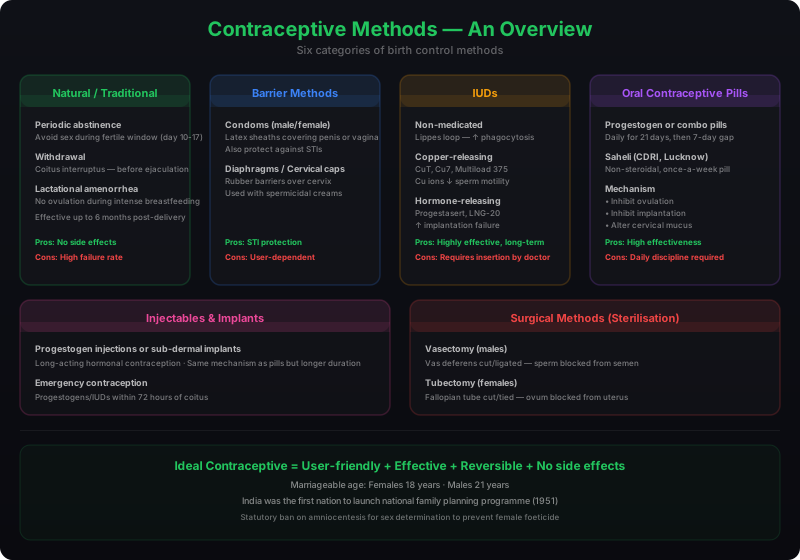
An ideal contraceptive should meet several criteria: it should be user-friendly, readily available, effective, and reversible with minimal or no side effects. It should not interfere with the user's sexual drive, desire, or the sexual act itself. Contraceptive methods currently available can be broadly classified into several categories:
Natural / Traditional Methods
These rely on biological principles to prevent the meeting of ovum and sperm, without the use of any drugs or devices.
Barrier Methods
Physical barriers prevent the ovum and sperm from coming into contact, thereby preventing fertilisation.
Oral Contraceptives & IUDs
Hormonal pills and intra-uterine devices offer highly effective and widely used forms of contraception.
Injectables, Implants & Surgical Methods
These provide long-term or permanent contraception through hormonal injections, sub-dermal implants, or sterilisation procedures.
Natural / Traditional Methods
Natural methods operate on the principle of preventing the ovum and sperm from ever meeting. There are three principal approaches:
- Periodic abstinence: Couples avoid sexual intercourse during the fertile period — roughly from day 10 to day 17 of the menstrual cycle, when ovulation is expected. Since the chances of fertilisation are highest during this window, abstaining from coitus at this time can prevent conception.
- Withdrawal (Coitus interruptus): The male partner withdraws the penis from the vagina just before ejaculation, thereby avoiding insemination of the female.
- Lactational amenorrhea: This method is based on the fact that ovulation — and therefore the menstrual cycle — does not occur during the period of intense lactation following childbirth. As long as the mother breast-feeds the child exclusively, the chances of conception are nearly zero. However, this method is reported to be effective only up to a maximum of six months after delivery.
Since no medicines or devices are used in natural methods, side effects are virtually absent. However, the chances of failure are relatively high.
Barrier Methods
In barrier methods, physical barriers are employed to prevent the ovum and sperm from meeting. These methods are available for both males and females.
Condoms are thin sheaths made of rubber or latex that cover the penis (male condom) or the vagina and cervix (female condom) just before intercourse, preventing the ejaculated semen from entering the female reproductive tract. The brand Nirodh is a widely recognised male condom in India. The use of condoms has increased in recent years due to their added benefit of protecting against STIs and AIDS. Both male and female condoms are disposable, self-insertable, and provide privacy to the user.
Diaphragms, cervical caps, and vaults are rubber barriers that are inserted into the female reproductive tract to cover the cervix during coitus. They block the entry of sperm through the cervix and are reusable. Their contraceptive efficiency is typically enhanced when used in conjunction with spermicidal creams, jellies, or foams.
Intra-Uterine Devices (IUDs)
IUDs represent another highly effective and widely popular method of contraception. These devices are inserted by doctors or trained nurses into the uterus through the vagina. They are broadly categorised into three types:
| Type | Examples | Mode of Action |
|---|---|---|
| Non-medicated IUDs | Lippes loop | Increase phagocytosis of sperms within the uterus |
| Copper-releasing IUDs | CuT, Cu7, Multiload 375 | Cu ions released suppress sperm motility and fertilising capacity |
| Hormone-releasing IUDs | Progestasert, LNG-20 | Make uterus unsuitable for implantation; cervix becomes hostile to sperms |
IUDs are considered ideal contraceptives for women who wish to delay pregnancy and/or space their children. In fact, they are among the most widely accepted methods of contraception in India.
Oral Contraceptive Pills
The oral administration of small doses of either progestogens or progestogen–estrogen combinations constitutes another popular contraceptive method used by females. These are taken in tablet form — hence the common reference to them as "the pills."
Pills must be taken daily for 21 days, beginning preferably within the first five days of the menstrual cycle. After a gap of 7 days (during which menstruation occurs), the same pattern is repeated until the woman wishes to prevent conception. These pills function by:
- Inhibiting ovulation — preventing the release of the ovum from the ovary
- Inhibiting implantation — preventing the attachment of the embryo to the uterine wall
- Altering cervical mucus — making it hostile to sperm entry
Pills are highly effective, carry relatively fewer side effects, and are well-accepted by women. A notable innovation is Saheli — a new-generation oral contraceptive for women that contains a non-steroidal preparation. It is a "once a week" pill with very few side effects and high contraceptive value.
Progestogens alone or in combination with estrogen can also be administered as injections or implants placed under the skin. Their mode of action is similar to that of oral pills, but their effective duration is significantly longer. Furthermore, the administration of progestogens or progestogen–estrogen combinations, or IUDs, within 72 hours of coitus has been found to be highly effective as emergency contraceptives — useful in cases of rape or casual unprotected intercourse.
Surgical Methods (Sterilisation)
Surgical methods, also known as sterilisation, are generally recommended as a permanent (terminal) method for either partner to prevent any future pregnancies. These procedures block gamete transport and thereby prevent conception.
- Vasectomy (males): A small portion of the vas deferens is removed or ligated through a small incision made on the scrotum. This prevents sperm from reaching the semen.
- Tubectomy (females): A small portion of the fallopian tube is removed or tied through a small incision in the abdomen or through the vagina. This prevents the ovum from reaching the uterus.
While these techniques are highly effective, their reversibility is very poor. It is therefore essential to emphasise that the selection of a suitable contraceptive method should always be undertaken in consultation with qualified medical professionals.
Contraceptives are not regular requirements for maintaining reproductive health. They are employed against a natural reproductive event — conception or pregnancy — and are used to prevent, delay, or space pregnancy due to personal reasons. While they play a significant role in controlling population growth, their possible side effects — such as nausea, abdominal pain, breakthrough bleeding, irregular menstrual bleeding, or even breast cancer — though not very significant, should not be entirely ignored.
3.3 Medical Termination of Pregnancy (MTP)
Medical Termination of Pregnancy (MTP), also referred to as induced abortion, is the intentional or voluntary termination of pregnancy before the foetus has reached full term. Globally, an estimated 45 to 50 million MTPs are performed each year — representing roughly one-fifth of all conceived pregnancies annually.
Whether to accept or legalise MTP remains a subject of ongoing debate in many countries, given the emotional, ethical, religious, and social dimensions involved. The Government of India legalised MTP in 1971, though with strict conditions designed to prevent its misuse. Such restrictions are particularly important in the Indian context to curb the practice of indiscriminate and illegal female foeticide.
MTPs are required primarily to address unwanted pregnancies — whether resulting from casual unprotected intercourse, failure of contraception during coitus, or cases of rape. Additionally, MTPs are essential in situations where continuation of the pregnancy could be harmful or even fatal to the mother, the foetus, or both.
MTPs are considered relatively safe when performed during the first trimester (up to 12 weeks of pregnancy). Second trimester abortions are significantly more risky. A deeply concerning trend is that a large proportion of MTPs are carried out illegally by unqualified practitioners — making them not only unsafe but potentially fatal.
Another dangerous misuse involves amniocentesis — a procedure originally designed to detect genetic disorders in the foetus. In some cases, amniocentesis has been exploited to determine the sex of the unborn child. When the foetus is identified as female, it is frequently followed by an illegal MTP — a practice that is strictly against the law.
These harmful practices must be avoided, as they endanger both the young mother and the foetus. Effective counselling about the risks of unprotected coitus and illegal abortions, along with expanded healthcare facilities, can help reverse these unhealthy trends. The MTP (Amendment) Act was introduced to strengthen protections and ensure safer, more regulated access to this medical procedure.
3.4 Sexually Transmitted Infections (STIs)
Infections or diseases transmitted through sexual intercourse are collectively referred to as sexually transmitted infections (STIs). They are also known by other terms: venereal diseases (VD) or reproductive tract infections (RTI). Several STIs are commonly encountered:
| STI | Causative Agent | Key Features |
|---|---|---|
| Gonorrhoea | Neisseria gonorrhoeae | Bacterial; curable if detected early |
| Syphilis | Treponema pallidum | Bacterial; curable if detected early |
| Genital Herpes | Herpes Simplex Virus (HSV) | Viral; not curable |
| Chlamydiasis | Chlamydia trachomatis | Bacterial; curable if detected early |
| Genital Warts | Human Papillomavirus (HPV) | Viral; manageable |
| Trichomoniasis | Trichomonas vaginalis | Protozoal; curable if detected early |
| Hepatitis-B | Hepatitis B Virus (HBV) | Viral; not curable; also transmitted via blood, needles |
| HIV/AIDS | Human Immunodeficiency Virus (HIV) | Viral; not curable; most dangerous STI |
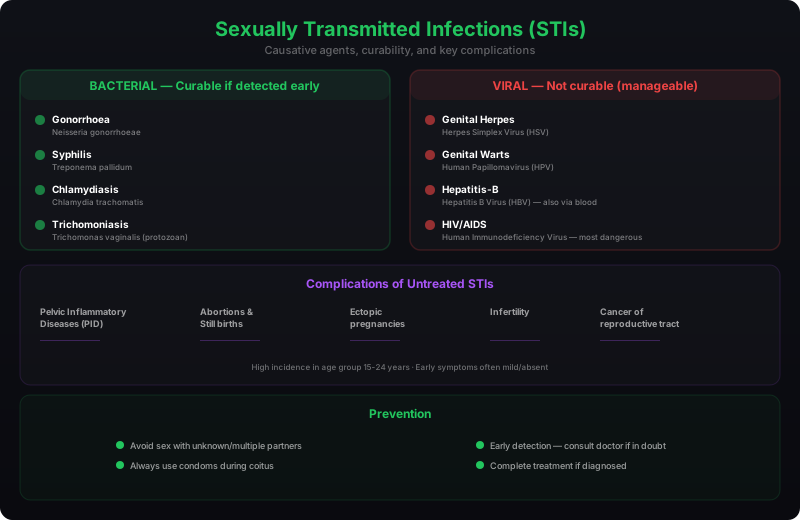
Except for hepatitis-B, genital herpes, and HIV infections, most other STIs are completely curable if detected early and treated properly. The early symptoms of most STIs are mild and include itching, fluid discharge, slight pain, and swellings in the genital region. Infected females are often asymptomatic, which means the infection can remain undetected for a prolonged period.
Absence or subtlety of early symptoms, combined with the social stigma attached to STIs, discourages infected individuals from seeking timely detection and treatment. This can lead to serious complications later, including:
- Pelvic Inflammatory Diseases (PID)
- Abortions and still births
- Ectopic pregnancies
- Infertility
- Cancer of the reproductive tract
STIs pose a major threat to a healthy society. Prevention and early detection are therefore given top priority under reproductive health-care programmes. Although all individuals are susceptible, the incidence of STIs is reported to be particularly high among those in the 15–24 year age group.
There is no cause for panic, as prevention is entirely feasible. One can stay free of STIs by adhering to these simple principles:
- Avoid sex with unknown partners or multiple partners.
- Always use condoms during coitus.
- In case of doubt, consult a qualified doctor for early detection and obtain complete treatment if an infection is diagnosed.
3.5 Infertility
No discussion of reproductive health is complete without addressing infertility. A significant number of couples worldwide — including many in India — are infertile, meaning they are unable to conceive despite engaging in regular, unprotected sexual cohabitation.
The causes of infertility are varied and may include physical factors, congenital abnormalities, diseases, drug effects, immunological issues, or psychological factors. In the Indian context, the female partner is often unfairly blamed for the couple's inability to have children, when in reality the problem more frequently lies with the male partner.
Infertility clinics and specialised healthcare units can help diagnose and correct some of these disorders, enabling couples to have children. However, when corrective treatments are not possible, couples can turn to Assisted Reproductive Technologies (ART) — a suite of techniques designed to assist conception through medical intervention.
Key ART Techniques
In Vitro Fertilisation (IVF)
Fertilisation occurs outside the body under simulated conditions. Ova from the wife/donor and sperm from the husband/donor are collected and induced to form a zygote in the laboratory — commonly known as the "test tube baby" programme.
ZIFT (Zygote Intra-Fallopian Transfer)
The zygote or early embryos (with up to 8 blastomeres) are transferred into the fallopian tube to complete their further development naturally.
IUT (Intra-Uterine Transfer)
Embryos with more than 8 blastomeres are transferred directly into the uterus for continued development.
GIFT (Gamete Intra-Fallopian Transfer)
An ovum collected from a donor is transferred into the fallopian tube of another female who cannot produce her own ovum but can provide a suitable environment for fertilisation and development.
Intra-Cytoplasmic Sperm Injection (ICSI) is a specialised procedure in which a single sperm is directly injected into the ovum to form an embryo in the laboratory. This technique is particularly useful in cases of severe male infertility.
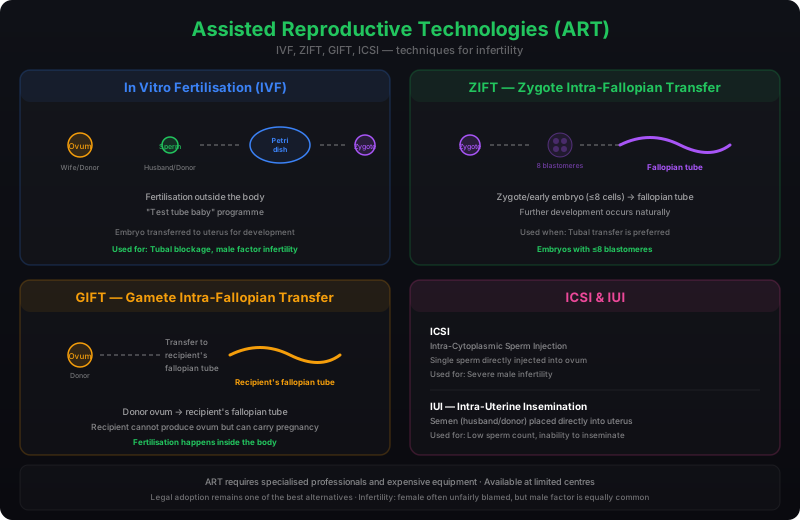
Artificial Insemination (AI) addresses infertility caused by the male partner's inability to inseminate the female or by very low sperm counts in the ejaculate. In this technique, semen — collected from either the husband or a healthy donor — is artificially introduced into the female's vagina or directly into the uterus (a procedure known as Intra-Uterine Insemination or IUI).
While these techniques offer hope, they demand extremely high precision from specialised professionals and expensive instrumentation. Consequently, these facilities are currently available only at a limited number of centres in the country, and their benefits are affordable to only a small proportion of the population. Emotional, religious, and social factors also serve as deterrents to the adoption of these methods.
Since the ultimate aim of all these procedures is to have children, and given that India has many orphaned and destitute children who would probably not survive without care, it is worth noting that legal adoption — permitted under Indian law — remains one of the best options for couples seeking to build a family.
✦ Summary
• Reproductive health refers to complete well-being in all aspects of reproduction — physical, emotional, behavioural, and social. India was the first nation in the world to initiate national-level action plans toward achieving a reproductively healthy society.
• Counselling and awareness about reproductive organs, adolescence and associated changes, safe sexual practices, and STIs (including AIDS) form the primary step towards reproductive health. The Reproductive and Child Health Care (RCH) programmes address menstrual irregularities, pregnancy-related aspects, delivery, MTP, STIs, birth control, infertility, and post-natal care.
• Improved health facilities and better living conditions led to an explosive growth in population. This necessitated intensive propagation of contraceptive methods. Options include natural, barrier, IUDs, pills, injectables, implants, and surgical methods. Contraceptives are not regular requirements, but are used to prevent, delay, or space pregnancies.
• Medical Termination of Pregnancy (MTP) is legalised in India (since 1971). It is generally performed to address unwanted pregnancies due to rape, casual relationships, or when continuation of pregnancy could be harmful or fatal to the mother or foetus.
• Sexually Transmitted Infections (STIs) are transmitted through sexual intercourse. Complications include PID, still birth, and infertility. Early detection facilitates better cure. Avoiding intercourse with unknown/multiple partners and using condoms are simple preventive measures.
• Infertility — the inability to conceive even after two years of unprotected cohabitation — can be addressed through Assisted Reproductive Technologies (ART), including IVF (the "Test Tube Baby" Programme), ZIFT, GIFT, ICSI, and Artificial Insemination.