Organisms and Populations
Understanding how organisms interact with one another and their physical habitats, and how population dynamics shape the living world
In this chapter
Our living world is fascinatingly diverse and amazingly complex. We can try to understand its complexity by investigating processes at various levels of biological organisation — macromolecules, cells, tissues, organs, individual organisms, populations, communities, ecosystems and biomes. At any level of biological organisation we can ask two types of questions — for example, when we hear the bulbul singing early morning in the garden, we may ask: 'How does the bird sing?' Or, 'Why does the bird sing?'
The 'how-type' questions seek the mechanism behind the process while the 'why-type' questions seek the significance of the process. For the first question, the answer might be in terms of the operation of the voice box and the vibrating bone in the bird, whereas for the second question the answer may lie in the bird's need to communicate with its mate during breeding season.
When you observe nature with a scientific frame of mind you will come up with many interesting questions — Why are night-blooming flowers generally white? How does the bee know which flower has nectar? Why does cactus have so many thorns? How does the chick recognise her own mother?
You have already learnt in previous classes that Ecology is a subject which studies the interactions among organisms and between the organism and its physical (abiotic) environment. Ecology is basically concerned with four levels of biological organisation — organisms, populations, communities and biomes. In this chapter we explore ecology at population levels.
11.1 Populations
11.1.1 Population Attributes
In nature, we rarely find isolated, single individuals of any species; majority of them live in groups in a well defined geographical area, share or compete for similar resources, potentially interbreed and thus constitute a population. Although the term interbreeding implies sexual reproduction, a group of individuals resulting from even asexual reproduction is also generally considered a population for the purpose of ecological studies.
All the cormorants in a wetland, rats in an abandoned dwelling, teakwood trees in a forest tract, bacteria in a culture plate and lotus plants in a pond, are some examples of a population. In earlier chapters you have learnt that although an individual organism is the one that has to cope with a changed environment, it is at the population level that natural selection operates to evolve the desired traits. Population ecology is, therefore, an important area because it links ecology to population genetics and evolution.
A population has certain attributes whereas, an individual organism does not. An individual may have births and deaths, but a population has birth rates and death rates. In a population these rates refer to per capita births and deaths — the rates expressed as change in numbers (increase or decrease) with respect to members of the population.
Example: If in a pond there were 20 lotus plants last year and through reproduction 8 new plants are added, taking the current population to 28, we calculate the birth rate as 8/20 = 0.4 offspring per lotus per year. If 4 individuals in a laboratory population of 40 fruitflies died during a specified time interval, say a week, the death rate in the population during that period is 4/40 = 0.1 individuals per fruitfly per week.
Another attribute characteristic of a population is sex ratio. An individual is either a male or a female but a population has a sex ratio (e.g., 60 per cent of the population are females and 40 per cent males).
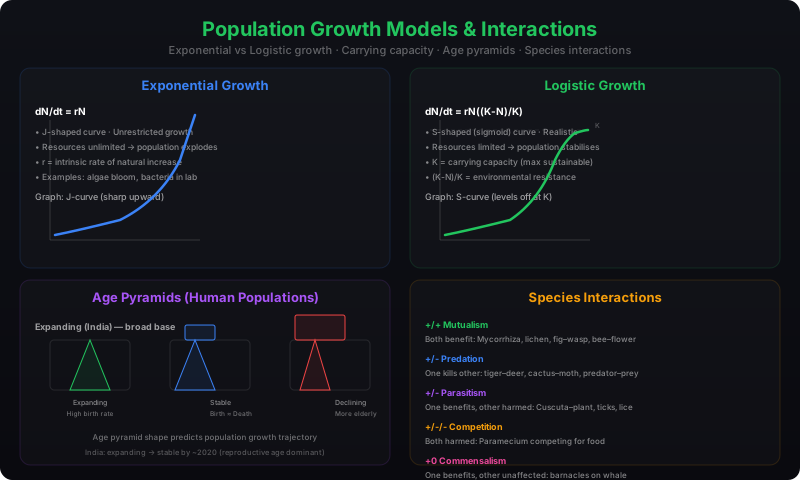
A population at any given time is composed of individuals of different ages. If the age distribution (per cent individuals of a given age or age group) is plotted for the population, the resulting structure is called an age pyramid (Figure 11.1). For human population, the age pyramids generally show age distribution of males and females in a diagram. The shape of the pyramids reflects the growth status of the population — (a) whether it is growing, (b) stable or (c) declining.
The size of the population tells us a lot about its status in the habitat. Whatever ecological processes we wish to investigate in a population, be it the outcome of competition with another species, the impact of a predator or the effect of a pesticide application, we always evaluate them in terms of any change in the population size.
Population size, technically called population density (designated as N), need not necessarily be measured in numbers only. In an area, if there are 200 carrot grass (Parthenium hysterophorus) plants but only a single huge banyan tree with a large canopy, stating that the population density of banyan is low relative to that of carrot grass amounts to underestimating the enormous role of the banyan in that community. In such cases, the per cent cover or biomass is a more meaningful measure of the population size.
- Sometimes, for certain ecological investigations, there is no need to know the absolute population densities; relative densities serve the purpose equally well.
- For instance, the number of fish caught per trap is good enough measure of its total population density in the lake.
- The tiger census in our national parks and tiger reserves is often based on pug marks and fecal pellets.
11.1.2 Population Growth
The size of a population for any species is not a static parameter. It keeps changing with time, depending on various factors including food availability, predation pressure and adverse weather. In fact, it is these changes in population density that give us some idea of what is happening to the population — whether it is flourishing or declining. The density of a population in a given habitat during a given period, fluctuates due to changes in four basic processes, two of which (natality and immigration) contribute to an increase in population density and two (mortality and emigration) to a decrease.
Natality (B)
Refers to the number of births during a given period in the population that are added to the initial density.
Mortality (D)
The number of deaths in the population during a given period.
Immigration (I)
The number of individuals of the same species that have come into the habitat from elsewhere during the time period under consideration.
Emigration (E)
The number of individuals of the population who left the habitat and gone elsewhere during the time period under consideration.
If N is the population density at time t, then its density at time t+1 is:
Nt+1 = Nt + [(B + I) – (D + E)]
Population density will increase if the number of births plus the number of immigrants (B + I) is more than the number of deaths plus the number of emigrants (D + E).
Under normal conditions, births and deaths are the most important factors influencing population density, the other two factors assuming importance only under special conditions. For instance, if a new habitat is just being colonised, immigration may contribute more significantly to population growth than birth rates.
Growth Models
Does the growth of a population with time show any specific and predictable pattern? We have been concerned about unbridled human population growth and problems created by it in our country and it is therefore natural for us to be curious if different animal populations in nature behave the same way or show some restraints on growth.
(i) Exponential Growth
Resource (food and space) availability is obviously essential for the unimpeded growth of a population. Ideally, when resources in the habitat are unlimited, each species has the ability to realise fully its innate potential to grow in number, as Darwin observed while developing his theory of natural selection. Then the population grows in an exponential or geometric fashion.
If in a population of size N, the birth rates (not total number but per capita births) are represented as b and death rates (again, per capita death rates) as d, then the increase or decrease in N during a unit time period t (dN/dt) will be:
dN/dt = (b – d) × N
Let (b – d) = r, then dN/dt = rN
The r in this equation is called the 'intrinsic rate of natural increase' and is a very important parameter chosen for assessing impacts of any biotic or abiotic factor on population growth.
• Norway rat: r = 0.015
• Flour beetle: r = 0.12
• Human population in India (1981): r = 0.0205
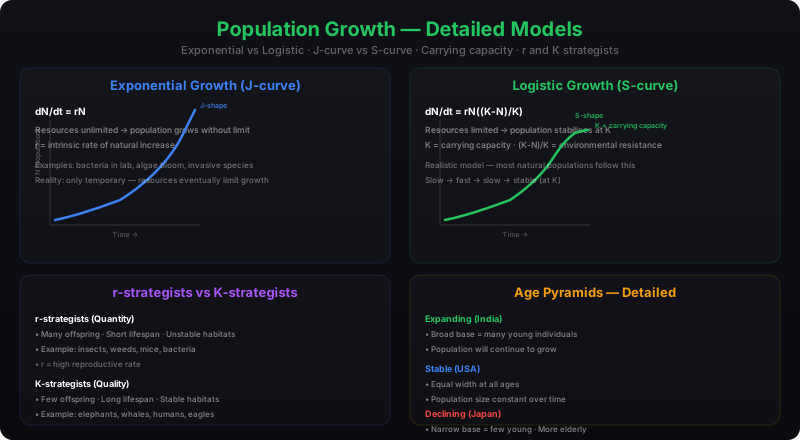
The above equation describes the exponential or geometric growth pattern of a population and results in a J-shaped curve when we plot N in relation to time (Figure 11.3). If you are familiar with basic calculus, you can derive the integral form of the exponential growth equation as:
Nt = N0 ert
Where:
Nt = Population density after time t
N0 = Population density at time zero
r = intrinsic rate of natural increase
e = the base of natural logarithms (2.71828)
Any species growing exponentially under unlimited resource conditions can reach enormous population densities in a short time. Darwin showed how even a slow growing animal like elephant could reach enormous numbers in the absence of checks.
(ii) Logistic Growth
No population of any species in nature has at its disposal unlimited resources to permit exponential growth. This leads to competition between individuals for limited resources. Eventually, the 'fittest' individual will survive and reproduce. The governments of many countries have also realised this fact and introduced various restraints with a view to limit human population growth.
In nature, a given habitat has enough resources to support a maximum possible number, beyond which no further growth is possible. Let us call this limit as nature's carrying capacity (K) for that species in that habitat.
A population growing in a habitat with limited resources shows initially a lag phase, followed by phases of acceleration and deceleration and finally an asymptote, when the population density reaches the carrying capacity. A plot of N in relation to time (t) results in a sigmoid curve. This type of population growth is called Verhulst-Pearl Logistic Growth and is described by the following equation:
dN/dt = rN ((K – N) / K)
Where N = Population density at time t
r = Intrinsic rate of natural increase
K = Carrying capacity
Since resources for growth for most animal populations are finite and become limiting sooner or later, the logistic growth model is considered a more realistic one.
11.1.3 Life History Variation
Populations evolve to maximise their reproductive fitness, also called Darwinian fitness (high r value), in the habitat in which they live. Under a particular set of selection pressures, organisms evolve towards the most efficient reproductive strategy.
Single Breeders
Some organisms breed only once in their lifetime — Pacific salmon fish, bamboo. They invest all their reproductive energy in one event.
Multiple Breeders
Others breed many times during their lifetime — most birds and mammals. They spread reproductive effort across many seasons.
Many Small Offspring
Some produce a large number of small-sized offspring — Oysters, pelagic fishes. A strategy of quantity over quality.
Few Large Offspring
Others produce a small number of large-sized offspring — birds, mammals. A strategy of quality over quantity.
Ecologists suggest that life history traits of organisms have evolved in relation to the constraints imposed by the abiotic and biotic components of the habitat in which they live. Evolution of life history traits in different species is currently an important area of research being conducted by ecologists.
11.1.4 Population Interactions
Can you think of any natural habitat on earth that is inhabited just by a single species? There is no such habitat and such a situation is even inconceivable. For any species, the minimal requirement is one more species on which it can feed. Even a plant species, which makes its own food, cannot survive alone; it needs soil microbes to break down the organic matter in soil and return the inorganic nutrients for absorption. And then, how will the plant manage pollination without an animal agent?
Interspecific interactions arise from the interaction of populations of two different species. They could be beneficial, detrimental or neutral (neither harm nor benefit) to one of the species or both. Assigning a '+' sign for beneficial interaction, '–' sign for detrimental and 0 for neutral interaction, let us look at all the possible outcomes of interspecific interactions.
| Species A | Species B | Name of Interaction |
|---|---|---|
| + | + | Mutualism |
| – | – | Competition |
| + | – | Predation |
| + | – | Parasitism |
| + | 0 | Commensalism |
| – | 0 | Amensalism |
Both the species benefit in mutualism and both lose in competition in their interactions with each other. In both parasitism and predation only one species benefits (parasite and predator, respectively) and the interaction is detrimental to the other species (host and prey, respectively). The interaction where one species is benefitted and the other is neither benefitted nor harmed is called commensalism. In amensalism on the other hand one species is harmed whereas the other is unaffected. Predation, parasitism and commensalism share a common characteristic — the interacting species live closely together.
(i) Predation
What would happen to all the energy fixed by autotrophic organisms if the community has no animals to eat the plants? You can think of predation as nature's way of transferring to higher trophic levels the energy fixed by plants. When we think of predator and prey, most probably it is the tiger and the deer that readily come to our mind, but a sparrow eating any seed is no less a predator. Although animals eating plants are categorised separately as herbivores, they are, in a broad ecological context, not very different from predators.
Besides acting as 'conduits' for energy transfer across trophic levels, predators play other important roles:
- They keep prey populations under control. But for predators, prey species could achieve very high population densities and cause ecosystem instability.
- When certain exotic species are introduced into a geographical area, they become invasive and start spreading fast because the invaded land does not have its natural predators.
- Biological control methods adopted in agricultural pest control are based on the ability of the predator to regulate prey population.
- Predators also help in maintaining species diversity in a community, by reducing the intensity of competition among competing prey species.
Case Study — Prickly Pear Cactus in Australia: The prickly pear cactus introduced into Australia in the early 1920's caused havoc by spreading rapidly into millions of hectares of rangeland. Finally, the invasive cactus was brought under control only after a cactus-feeding predator (a moth) from its natural habitat was introduced into the country.
Case Study — Starfish Pisaster: In the rocky intertidal communities of the American Pacific Coast the starfish Pisaster is an important predator. In a field experiment, when all the starfish were removed from an enclosed intertidal area, more than 10 species of invertebrates became extinct within a year, because of inter-specific competition.
If a predator is too efficient and overexploits its prey, then the prey might become extinct and following it, the predator will also become extinct for lack of food. This is the reason why predators in nature are 'prudent'.
Prey species have evolved various defenses to lessen the impact of predation:
- Crypsis (Camouflage): Some species of insects and frogs are cryptically-coloured to avoid being detected easily by the predator.
- Poisonous chemicals: Some are poisonous and therefore avoided by the predators. The Monarch butterfly is highly distasteful to its predator (bird) because of a special chemical present in its body — the butterfly acquires this chemical during its caterpillar stage by feeding on a poisonous weed.
For plants, herbivores are the predators. Nearly 25 per cent of all insects are known to be phytophagous (feeding on plant sap and other parts of plants). The problem is particularly severe for plants because, unlike animals, they cannot run away from their predators. Plants therefore have evolved an astonishing variety of morphological and chemical defences against herbivores.
- Thorns (Acacia, Cactus) are the most common morphological means of defence.
- Many plants produce and store chemicals that make the herbivore sick when they are eaten, inhibit feeding or digestion, disrupt its reproduction or even kill it.
- The weed Calotropis produces highly poisonous cardiac glycosides — that is why you never see any cattle or goats browsing on this plant.
- A wide variety of chemical substances that we extract from plants on a commercial scale (nicotine, caffeine, quinine, strychnine, opium, etc.) are produced by them actually as defences against grazers and browsers.
(ii) Competition
When Darwin spoke of the struggle for existence and survival of the fittest in nature, he was convinced that interspecific competition is a potent force in organic evolution. It is generally believed that competition occurs when closely related species compete for the same resources that are limiting, but this is not entirely true.
Firstly, totally unrelated species could also compete for the same resource. For instance, in some shallow South American lakes, visiting flamingoes and resident fishes compete for their common food, the zooplankton in the lake. Secondly, resources need not be limiting for competition to occur; in interference competition, the feeding efficiency of one species might be reduced due to the interfering and inhibitory presence of the other species, even if resources (food and space) are abundant.
Competition is best defined as a process in which the fitness of one species (measured in terms of its 'r' — the intrinsic rate of increase) is significantly lower in the presence of another species.
Competitive Exclusion Principle (Gause): Gause's 'Competitive Exclusion Principle' states that two closely related species competing for the same resources cannot co-exist indefinitely and the competitively inferior one will be eliminated eventually. This may be true if resources are limiting, but not otherwise.
Evidence for Competition in Nature:
- The Abingdon tortoise in Galapagos Islands became extinct within a decade after goats were introduced on the island, apparently due to the greater browsing efficiency of the goats.
- Competitive release: A species whose distribution is restricted to a small geographical area because of the presence of a competitively superior species, is found to expand its distributional range dramatically when the competing species is experimentally removed.
- Connell's barnacle experiment: On the rocky sea coasts of Scotland, the larger and competitively superior barnacle Balanus dominates the intertidal area, and excludes the smaller barnacle Chathamalus from that zone.
More recent studies do not support such gross generalisations about competition. Species facing competition might evolve mechanisms that promote co-existence rather than exclusion. One such mechanism is 'resource partitioning'. If two species compete for the same resource, they could avoid competition by choosing, for instance, different times for feeding or different foraging patterns.
MacArthur showed that five closely related species of warblers living on the same tree were able to avoid competition and co-exist due to behavioural differences in their foraging activities.
(iii) Parasitism
Considering that the parasitic mode of life ensures free lodging and meals, it is not surprising that parasitism has evolved in so many taxonomic groups from plants to higher vertebrates. Many parasites have evolved to be host-specific (they can parasitise only a single species of host) in such a way that both host and the parasite tend to co-evolve; that is, if the host evolves special mechanisms for rejecting or resisting the parasite, the parasite has to evolve mechanisms to counteract and neutralise them, in order to be successful with the same host species.
In accordance with their life styles, parasites evolved special adaptations such as:
- Loss of unnecessary sense organs
- Presence of adhesive organs or suckers to cling on to the host
- Loss of digestive system
- High reproductive capacity
The life cycles of parasites are often complex, involving one or two intermediate hosts or vectors to facilitate parasitisation of its primary host. The human liver fluke (a trematode parasite) depends on two intermediate hosts (a snail and a fish) to complete its life cycle. The malarial parasite needs a vector (mosquito) to spread to other hosts.
Majority of the parasites harm the host; they may reduce the survival, growth and reproduction of the host and reduce its population density. They might render the host more vulnerable to predation by making it physically weak.
Ectoparasites
Parasites that feed on the external surface of the host organism. Examples: lice on humans, ticks on dogs. Many marine fish are infested with ectoparasitic copepods. Cuscuta, a parasitic plant commonly found growing on hedge plants, has lost its chlorophyll and leaves in the course of evolution.
Endoparasites
Parasites that live inside the host body at different sites (liver, kidney, lungs, red blood cells, etc.). Their life cycles are more complex because of their extreme specialisation. Morphological and anatomical features are greatly simplified while emphasising their reproductive potential.
Brood parasitism in birds is a fascinating example of parasitism in which the parasitic bird lays its eggs in the nest of its host and lets the host incubate them. During the course of evolution, the eggs of the parasitic bird have evolved to resemble the host's egg in size and colour to reduce the chances of the host bird detecting the foreign eggs and ejecting them from the nest. Try to follow the movements of the cuckoo (koel) and the crow in your neighbourhood park during the breeding season (spring to summer) and watch brood parasitism in action.
Note: The female mosquito is not considered a parasite, although it needs our blood for reproduction — it feeds temporarily and does not live on the host.
(iv) Commensalism
This is the interaction in which one species benefits and the other is neither harmed nor benefited. Classic examples include:
- An orchid growing as an epiphyte on a mango branch, and barnacles growing on the back of a whale benefit while neither the mango tree nor the whale derives any apparent benefit.
- The cattle egret and grazing cattle in close association — the egrets always forage close to where the cattle are grazing because the cattle, as they move, stir up and flush out insects from the vegetation that otherwise might be difficult for the egrets to find and catch.
- The interaction between sea anemone that has stinging tentacles and the clown fish that lives among them — the fish gets protection from predators which stay away from the stinging tentacles. The anemone does not appear to derive any benefit by hosting the clown fish.
(v) Mutualism
This interaction confers benefits on both the interacting species. Lichens represent an intimate mutualistic relationship between a fungus and photosynthesising algae or cyanobacteria. Similarly, the mycorrhizae are associations between fungi and the roots of higher plants. The fungi help the plant in the absorption of essential nutrients from the soil while the plant in turn provides the fungi with energy-yielding carbohydrates.
The most spectacular and evolutionarily fascinating examples of mutualism are found in plant-animal relationships. Plants need the help of animals for pollinating their flowers and dispersing their seeds. Animals obviously have to be paid 'fees' for the services that plants expect from them. Plants offer rewards or fees in the form of pollen and nectar for pollinators and juicy and nutritious fruits for seed dispersers.
Orchids show a bewildering diversity of floral patterns many of which have evolved to attract the right pollinator insect (bees and bumblebees) and ensure guaranteed pollination by it. Not all orchids offer rewards. The Mediterranean orchid Ophrys employs 'sexual deceit' to get pollination done by a species of bee.
One petal of its flower bears an uncanny resemblance to the female of the bee in size, colour and markings. The male bee is attracted to what it perceives as a female, 'pseudocopulates' with the flower, and during that process is dusted with pollen from the flower. When this same bee 'pseudocopulates' with another flower, it transfers pollen to it and thus, pollinates the flower.
Here you can see how co-evolution operates. If the female bee's colour patterns change even slightly for any reason during evolution, pollination success will be reduced unless the orchid flower co-evolves to maintain the resemblance of its petal to the female bee.
✓ Summary
• As a branch of biology, Ecology is the study of the relationships of living organisms with the abiotic (physico-chemical factors) and biotic components (other species) of their environment. It is concerned with four levels of biological organisation — organisms, populations, communities and biomes.
• Evolutionary changes through natural selection take place at the population level and hence, population ecology is an important area of ecology. A population is a group of individuals of a given species sharing or competing for similar resources in a defined geographical area. Populations have attributes that individual organisms do not — birth rates and death rates, sex ratio and age distribution.
• The proportion of different age groups of males and females in a population is often presented graphically as age pyramid; its shape indicates whether a population is stationary, growing or declining.
• Ecological effects of any factors on a population are generally reflected in its size (population density), which may be expressed in different ways (numbers, biomass, per cent cover, etc.) depending on the species.
• Populations grow through births and immigration and decline through deaths and emigration. When resources are unlimited, the growth is usually exponential but when resources become progressively limiting, the growth pattern turns logistic. In either case, growth is ultimately limited by the carrying capacity of the environment. The intrinsic rate of natural increase (r) is a measure of the inherent potential of a population to grow.
• In nature populations of different species in a habitat do not live in isolation but interact in many ways. Depending on the outcome, these interactions between two species are classified as competition (both species suffer), predation and parasitism (one benefits and the other suffers), commensalism (one benefits and the other is unaffected), amensalism (one is harmed, other unaffected) and mutualism (both species benefit).
• Predation is a very important process through which trophic energy transfer is facilitated and some predators help in controlling their prey populations. Plants have evolved diverse morphological and chemical defenses against herbivory.
• In competition, it is presumed that the superior competitor eliminates the inferior one (the Competitive Exclusion Principle), but many closely related species have evolved various mechanisms which facilitate their co-existence. Some of the most fascinating cases of mutualism in nature are seen in plant-pollinator interactions.
📝 Exercises
1. List the attributes that populations possess but not individuals.
2. If a population growing exponentially double in size in 3 years, what is the intrinsic rate of increase (r) of the population?
3. Name important defence mechanisms in plants against herbivory.
4. An orchid plant is growing on the branch of mango tree. How do you describe this interaction between the orchid and the mango tree?
5. What is the ecological principle behind the biological control method of managing with pest insects?
6. Define population and community.
7. Define the following terms and give one example for each:
(a) Commensalism
(b) Parasitism
(c) Camouflage
(d) Mutualism
(e) Interspecific competition
8. With the help of suitable diagram describe the logistic population growth curve.
9. Select the statement which explains best parasitism.
(a) One organism is benefited.
(b) Both the organisms are benefited.
(c) One organism is benefited, other is not affected.
(d) One organism is benefited, other is affected.
10. List any three important characteristics of a population and explain.