Unit 9: Amines
Nitrogen-containing organic compounds — essential in medicines, dyes, and biological systems
9.1 Classification & Structure
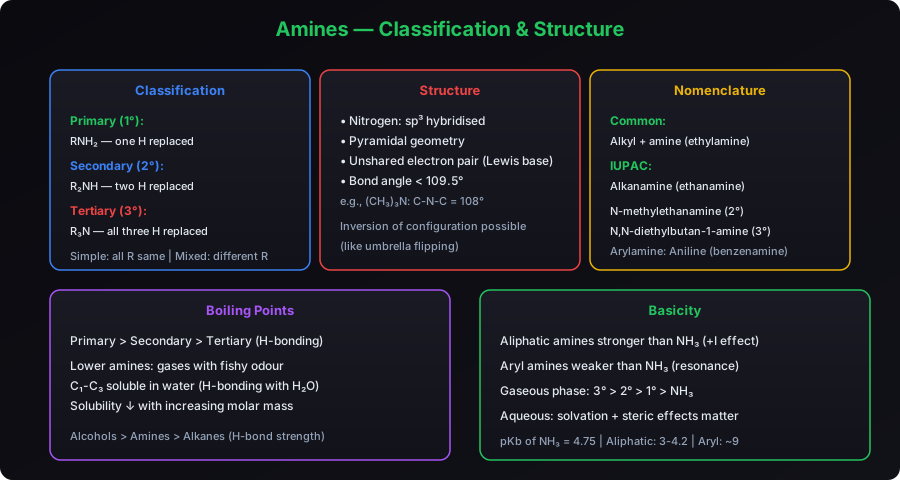
Primary (1°) Amines
RNH₂ — one hydrogen replaced by alkyl/aryl group. E.g., methylamine, aniline.
Secondary (2°) Amines
R₂NH — two hydrogens replaced. E.g., dimethylamine, diphenylamine.
Tertiary (3°) Amines
R₃N — all three hydrogens replaced. E.g., trimethylamine, triethylamine.
9.2 Preparation
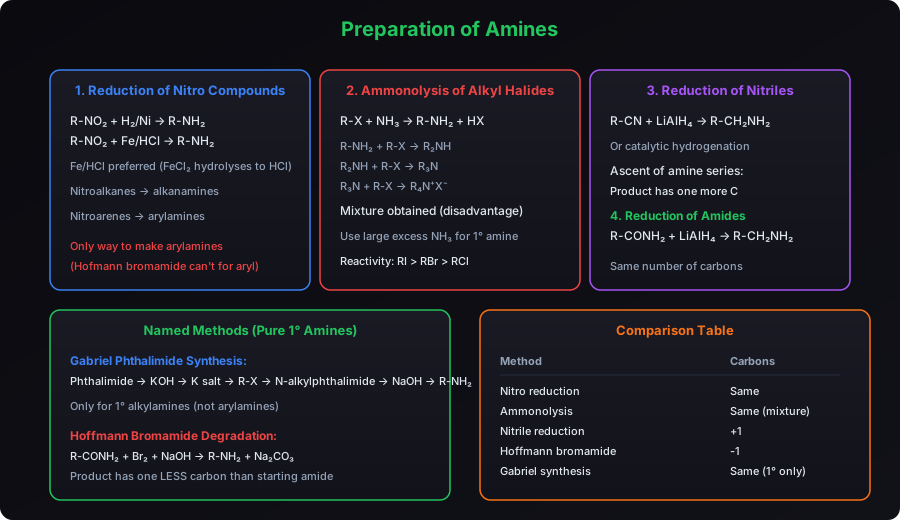
9.3 Basic Character
In aqueous phase: Solvation and steric effects complicate the trend
Aliphatic amines are stronger bases than NH₃ (pKb ~3-4.2)
Aryl amines are weaker bases than NH₃ (pKb ~9) due to electron withdrawal by ring
9.4 Reactions
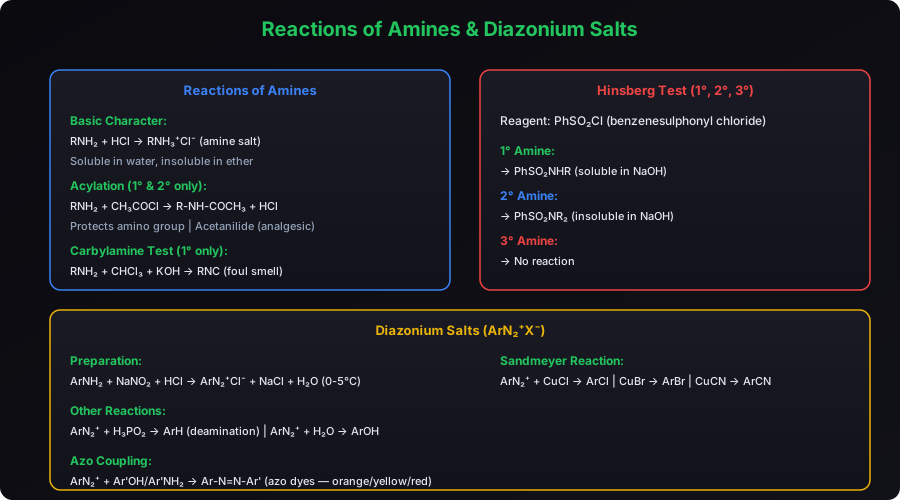
Distinguishing Tests
| Test | 1° Amine | 2° Amine | 3° Amine |
|---|---|---|---|
| Carbylamine | Foul smell (isocyanide) | No reaction | No reaction |
| Hinsberg | Soluble in NaOH | Insoluble in NaOH | No reaction |
| Nitrous acid | R-OH + N₂↑ (aliphatic) | N-Nitrosoamine (yellow oil) | No visible reaction |
Diazonium Salts
- Prepared at 0-5°C: ArNH₂ + NaNO₂ + HCl → ArN₂⁺Cl⁻
- Sandmeyer reaction: ArN₂⁺ + CuCl → ArCl, CuBr → ArBr, CuCN → ArCN
- Azo coupling: ArN₂⁺ + Ar'OH → Ar-N=N-Ar' (azo dyes — orange/yellow/red)
- Used to synthesise many aromatic compounds
Summary
Amines are derivatives of ammonia with pyramidal structure. They are classified as primary, secondary, and tertiary. Amines are prepared by reduction of nitro compounds, ammonolysis, nitrile reduction, Gabriel synthesis, and Hoffmann bromamide reaction. Basic character depends on structure, solvation, and inductive effects. Amines undergo acylation, carbylamine test, and form diazonium salts (for arylamines). Diazonium salts are versatile intermediates for synthesising azo dyes and many aromatic compounds via Sandmeyer and coupling reactions.