Unit 8: Aldehydes, Ketones and Carboxylic Acids
Carbonyl and carboxyl compounds — central to organic synthesis and biochemistry
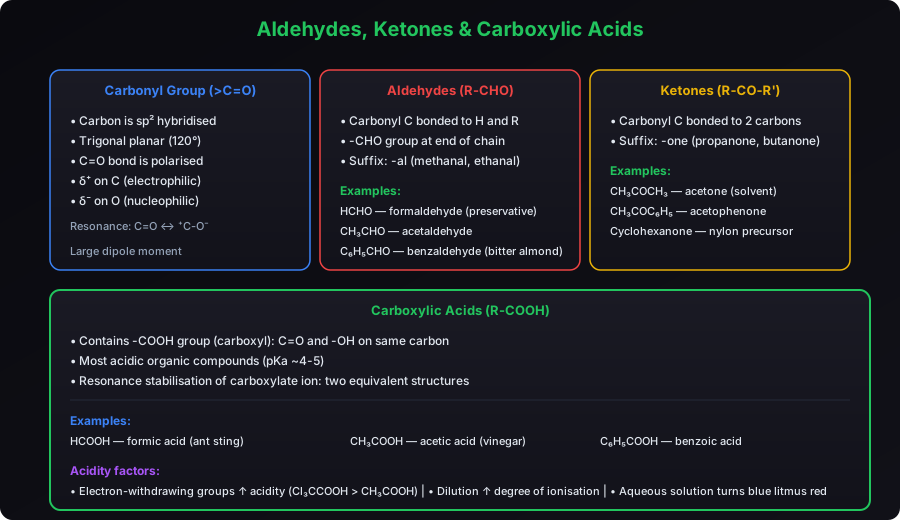
8.1 Nomenclature and Structure
8.2 Preparation
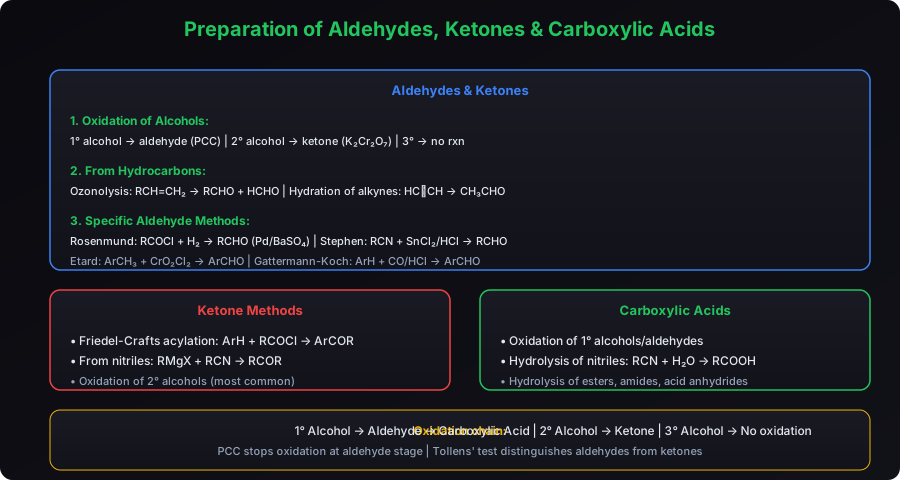
Tollens' test distinguishes aldehydes from ketones (silver mirror test)
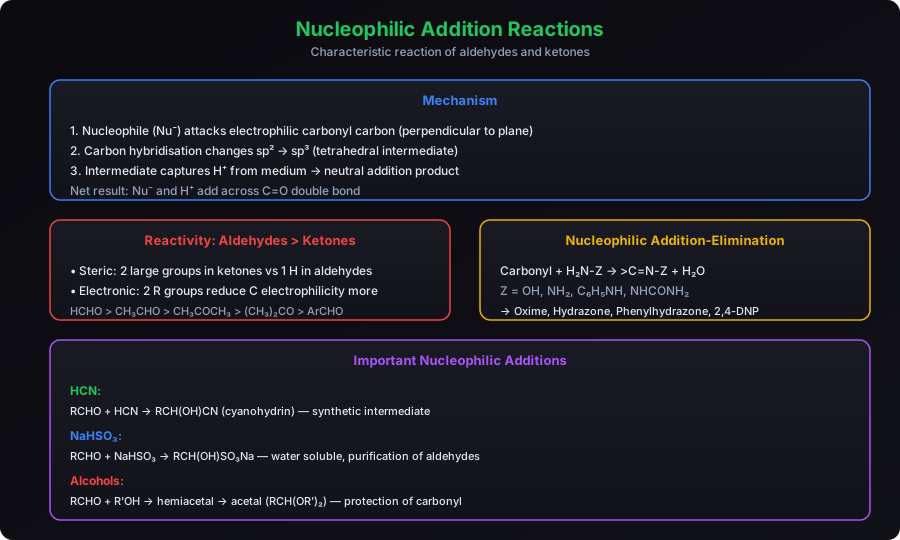
8.3 Nucleophilic Addition Reactions
Important Derivatives
| Reagent | Product | Name |
|---|---|---|
| H₂N-OH | >C=N-OH | Oxime |
| H₂N-NH₂ | >C=N-NH₂ | Hydrazone |
| H₂N-NHC₆H₅ | >C=N-NHC₆H₅ | Phenylhydrazone |
| H₂N-NH-CO-C₆H₃(NO₂)₂ | >C=N-NH-C₆H₃(NO₂)₂ | 2,4-DNP (orange ppt — carbonyl test) |
8.4 Named Reactions
Cannizzaro Reaction
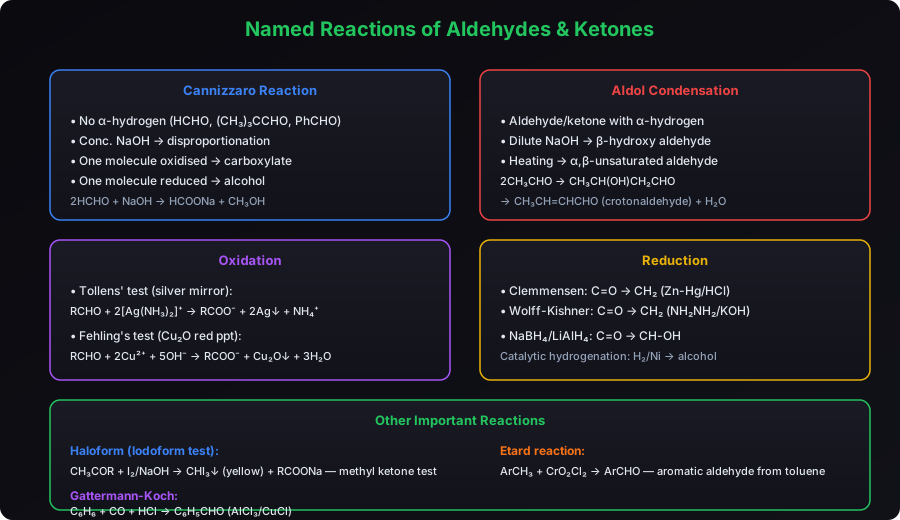
Aldehydes without α-hydrogen (HCHO, PhCHO) undergo disproportionation in conc. NaOH → alcohol + carboxylate salt.
Aldol Condensation
Aldehydes/ketones with α-H + dilute NaOH → β-hydroxy aldehyde → α,β-unsaturated aldehyde (heating).
Haloform Reaction
Methyl ketones (CH₃CO-) give iodoform test (yellow CHI₃ ppt) with I₂/NaOH.
8.5 Carboxylic Acids
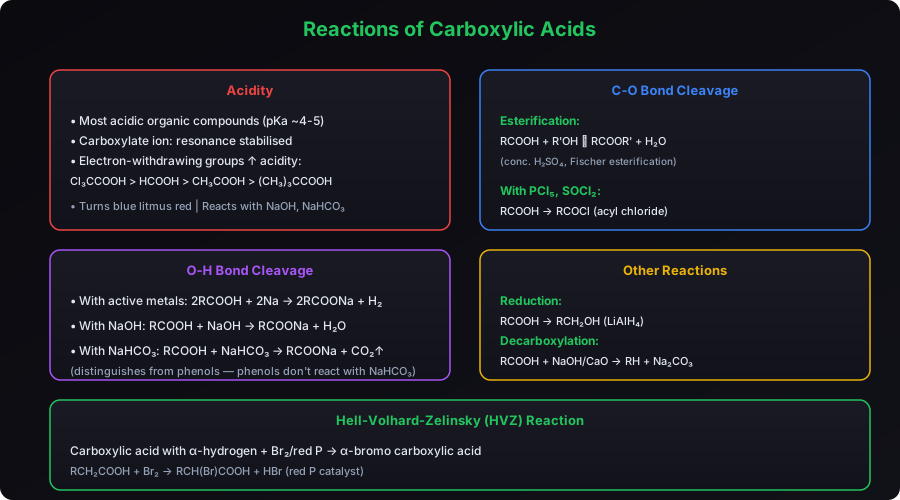
Acidity
- Most acidic organic compounds (pKa ~4-5)
- Carboxylate ion is stabilised by resonance (two equivalent structures)
- Electron-withdrawing groups increase acidity: Cl₃CCOOH > HCOOH > CH₃COOH
- Turns blue litmus red, reacts with NaOH and NaHCO₃
Key Reactions
- Esterification: RCOOH + R'OH ⇌ RCOOR' + H₂O (H₂SO₄ catalyst)
- With SOCl₂/PCl₅: RCOOH → RCOCl (acyl chloride preparation)
- With NaHCO₃: RCOOH + NaHCO₃ → RCOONa + CO₂↑ + H₂O
- HVZ reaction: α-halogenation of carboxylic acids (RCH₂COOH → RCH(Br)COOH)
- Decarboxylation: RCOOH + NaOH/CaO → RH + Na₂CO₃
Summary
Aldehydes, ketones, and carboxylic acids contain the carbonyl (>C=O) and carboxyl (-COOH) groups respectively. Aldehydes are more reactive than ketones in nucleophilic addition due to steric and electronic effects. Important named reactions include Cannizzaro (disproportionation of non-enolisable aldehydes), Aldol condensation (α-hydrogen containing aldehydes/ketones), and haloform reaction (methyl ketones). Carboxylic acids are the most acidic organic compounds due to resonance stabilisation of carboxylate ion. Tollens' and Fehling's tests distinguish aldehydes from ketones.