Unit 7: Alcohols, Phenols and Ethers
Oxygen-containing organic compounds — essential in industry, medicine, and daily life
7.1 Classification
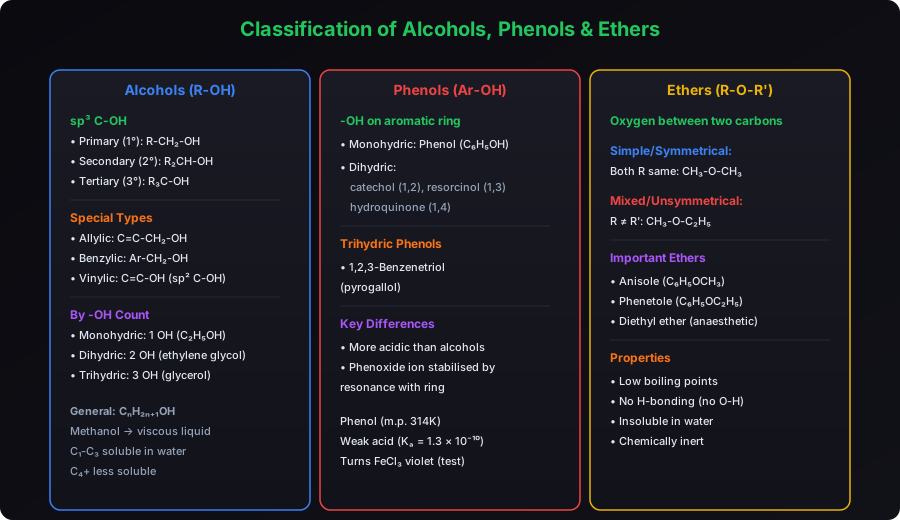
Alcohols (R-OH)
-OH group on sp³ carbon. Classified as primary (1°), secondary (2°), or tertiary (3°). Also allylic, benzylic, and vinylic.
Phenols (Ar-OH)
-OH group directly on aromatic ring. More acidic than alcohols due to resonance stabilisation of phenoxide ion.
Ethers (R-O-R')
Oxygen between two carbon atoms. Symmetrical (R=R') or unsymmetrical (R≠R').
7.2 Nomenclature
Alcohols
IUPAC: replace 'e' of alkane with 'ol' — methanol, ethanol, propan-2-ol. Polyhydric: ethane-1,2-diol, propane-1,2,3-triol.
Phenols
Phenol is accepted IUPAC name. Substituted: o-cresol (2-methylphenol), p-cresol (4-methylphenol). Dihydroxy: catechol (1,2), resorcinol (1,3), hydroquinone (1,4).
Ethers
Common: alkyl groups + ether (ethylmethyl ether). IUPAC: alkoxyalkane (methoxyethane, ethoxybenzene).
7.3 Preparation
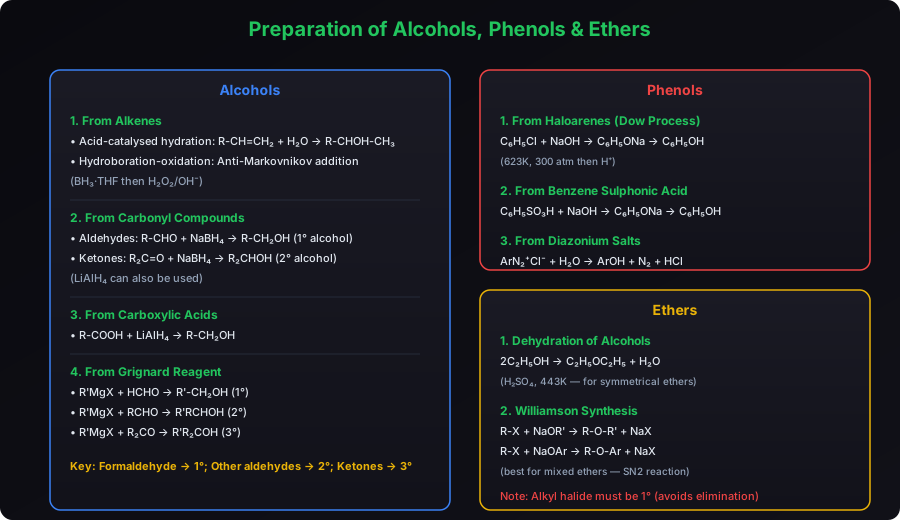
Williamson synthesis: Best method for mixed ethers — R-X (1°) + NaOR' → R-O-R'
7.4 Reactions of Alcohols
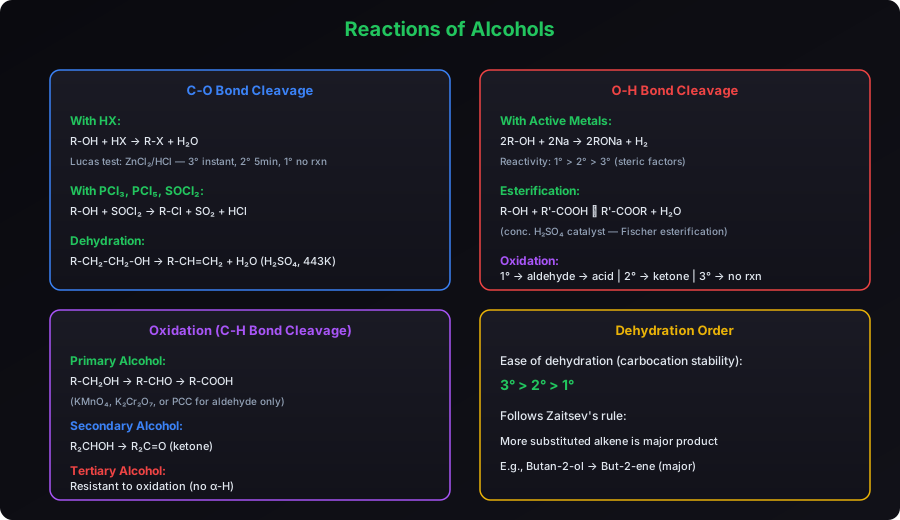
C-O Bond Cleavage
- With HX: R-OH + HX → R-X + H₂O (Lucas test: ZnCl₂/HCl distinguishes 1°, 2°, 3°)
- With SOCl₂: R-OH + SOCl₂ → R-Cl + SO₂ + HCl (best method — gaseous byproducts)
- Dehydration: R-CH₂CH₂-OH → R-CH=CH₂ + H₂O (H₂SO₄, 443K — Zaitsev's rule)
O-H Bond Cleavage
- Active metals: 2R-OH + 2Na → 2RONa + H₂ (reactivity: 1° > 2° > 3°)
- Esterification: R-OH + R'-COOH ⇌ R'-COOR + H₂O (conc. H₂SO₄)
Oxidation
- Primary: R-CH₂OH → R-CHO → R-COOH
- Secondary: R₂CHOH → R₂C=O (ketone)
- Tertiary: No oxidation (no α-hydrogen)
7.5 Reactions of Phenols
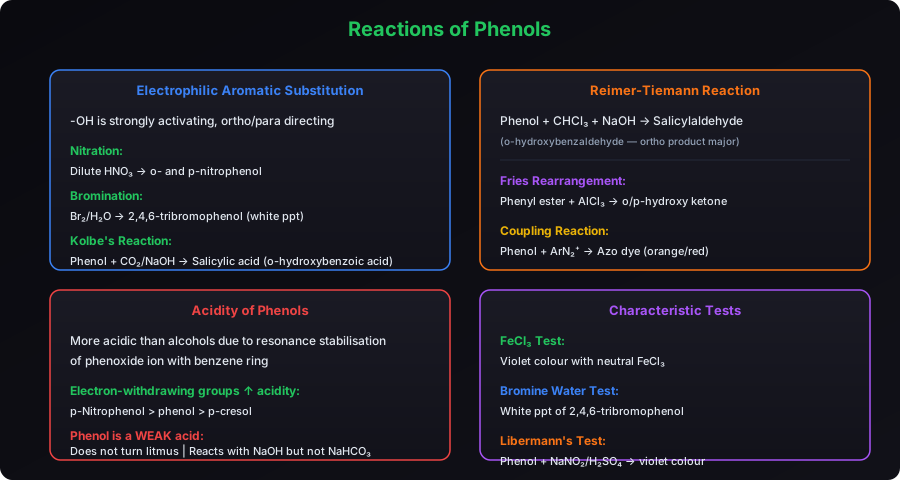
Bromine water gives white precipitate of 2,4,6-tribromophenol (test for phenols).
FeCl₃ gives violet colour (test for phenols).
Important Named Reactions
- Kolbe's reaction: Phenol + CO₂/NaOH → salicylic acid (o-hydroxybenzoic acid)
- Reimer-Tiemann reaction: Phenol + CHCl₃/NaOH → salicylaldehyde (o-hydroxybenzaldehyde)
- Coupling reaction: Phenol + ArN₂⁺ → azo dye (orange/red)
7.6 Ethers
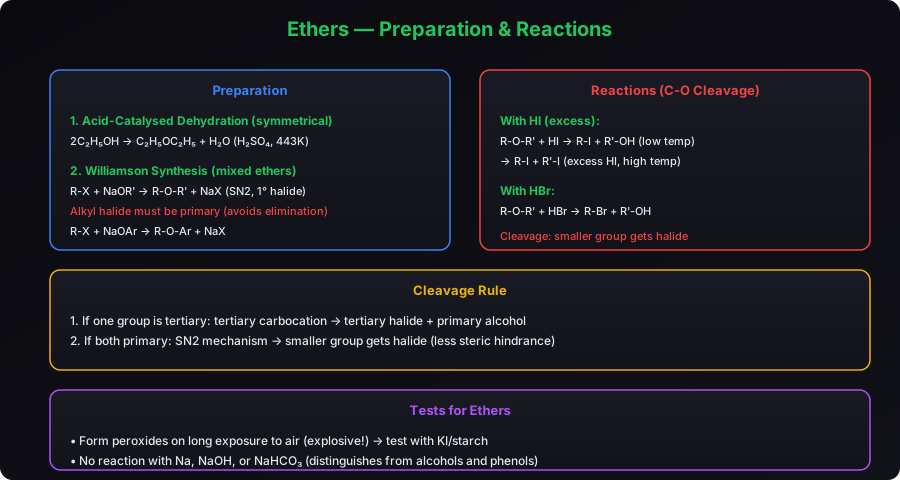
- Ethers are relatively unreactive — no reaction with Na, NaOH, or NaHCO₃
- C-O bond cleavage occurs with strong acids (HI, HBr)
- Ethers form explosive peroxides on prolonged air exposure — test with KI/starch paper before distillation
- Diethyl ether was historically used as general anaesthetic
Summary
Alcohols, phenols, and ethers are classified by the number of -OH groups and structure. Alcohols undergo C-O and O-H bond cleavage reactions, oxidation to carbonyl compounds, and dehydration. Phenols are more acidic than alcohols due to resonance stabilisation of phenoxide, undergo electrophilic substitution at ortho/para positions, and give characteristic colour tests. Ethers are prepared by dehydration of alcohols or Williamson synthesis, and undergo C-O cleavage with HI/HBr. Named reactions include Kolbe's, Reimer-Tiemann, Williamson synthesis, and Lucas test.