Unit 7: Redox Reactions
Oxidation and reduction occur simultaneously — the basis of energy, metallurgy, and life
7.1 Classical Idea of Redox Reactions
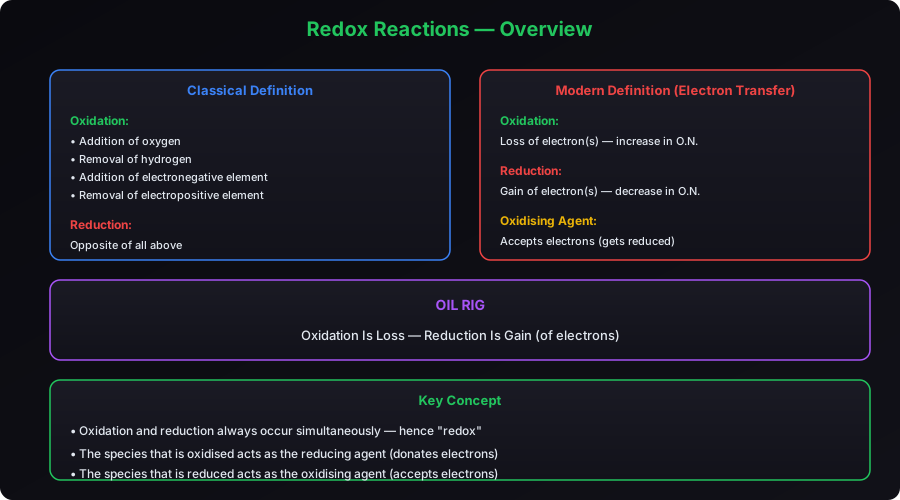
Oxidation: Increase in oxidation number | Reduction: Decrease in oxidation number
Oxidising agent: Gets reduced (accepts electrons) | Reducing agent: Gets oxidised (donates electrons)
7.2 Redox as Electron Transfer
Redox reactions can be understood as electron transfer processes. For example, in the formation of NaCl:
Cl₂(g) + 2e⁻ → 2Cl⁻(g) (reduction — gain of electrons)
Each step is called a half reaction. The sum of half reactions gives the overall reaction.
Competitive Electron Transfer
When zinc is placed in Cu(NO₃)₂ solution, copper is displaced: Zn(s) + Cu²⁺(aq) → Zn²⁺(aq) + Cu(s). Zinc releases electrons to copper, showing Zn > Cu in electron-releasing tendency.
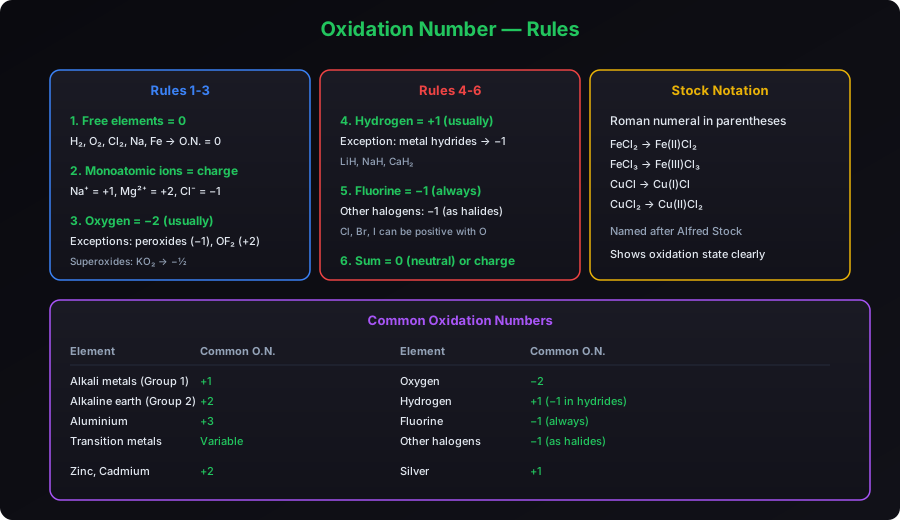
7.3 Oxidation Number
7.4 Types of Redox Reactions
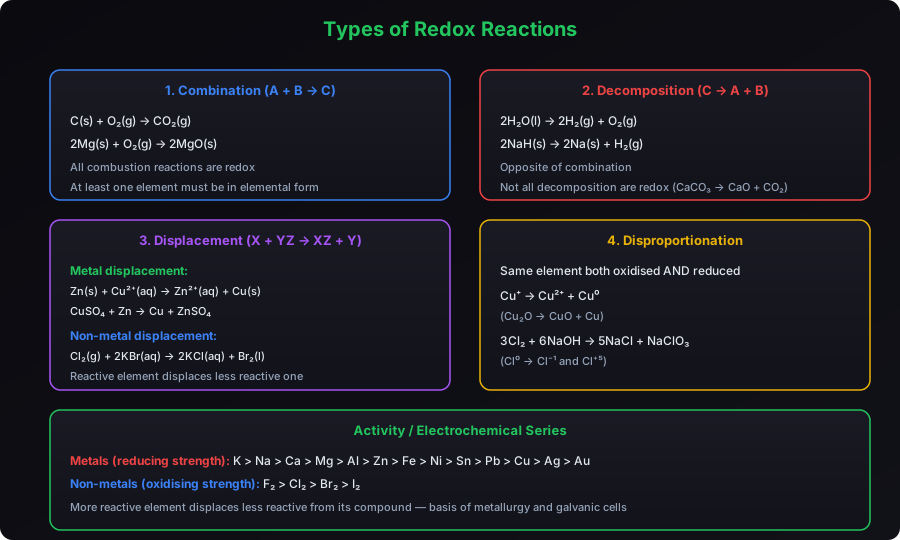
Combination
A + B → C. Both or one in elemental form. All combustion reactions are redox.
Decomposition
C → A + B. Opposite of combination. Not all are redox (e.g., CaCO₃ decomposition).
Displacement
X + YZ → XZ + Y. Reactive element displaces less reactive. Metal or non-metal.
Disproportionation
Same element is both oxidised and reduced. E.g., Cu⁺ → Cu²⁺ + Cu⁰.
7.5 Balancing Redox Reactions
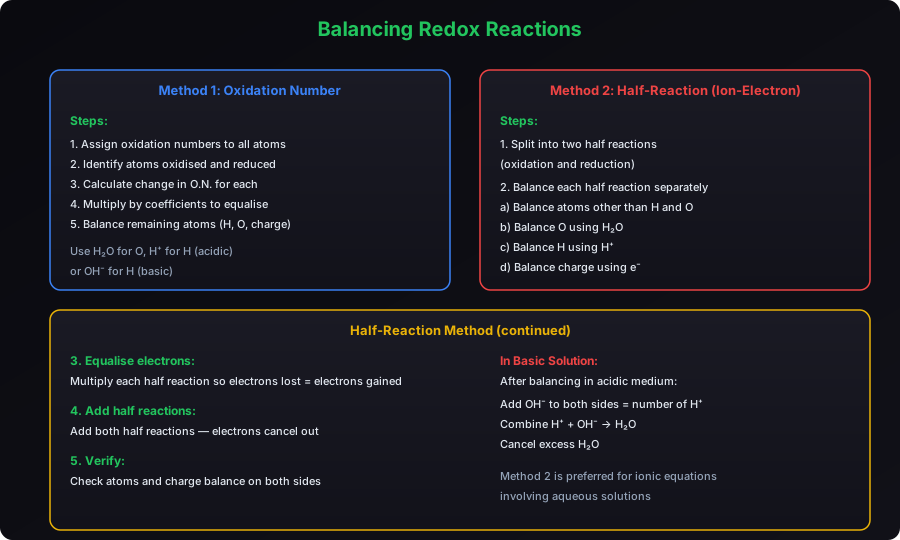
Method 2 — Half-Reaction: Split into oxidation and reduction halves, balance each separately (atoms, then charge with e⁻), equalise electrons, then add.
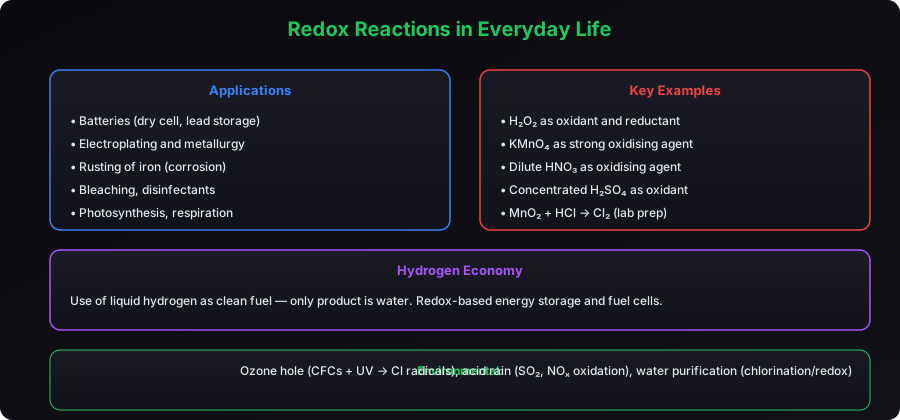
7.6 Applications
Summary
Redox reactions involve simultaneous oxidation and reduction. Oxidation is loss of electrons (increase in O.N.), reduction is gain (decrease in O.N.). Oxidation number rules allow identification of oxidised and reduced species. Redox reactions are classified as combination, decomposition, displacement, and disproportionation. They are balanced using oxidation number or half-reaction methods. Redox reactions are fundamental to batteries, metallurgy, corrosion, and biological processes like photosynthesis and respiration.