Photosynthesis in Higher Plants
The physico-chemical process by which green plants capture light energy and convert it into the chemical energy of organic compounds
In this chapter
All animals including human beings depend on plants for their food. Have you ever wondered where plants get their food? Green plants, in fact, have to make — or rather synthesise — the food they need, and all other organisms depend on them for their nutritional requirements. The green plants make the food they need through photosynthesis and are therefore called autotrophs. You have already learnt that autotrophic nutrition is found only in plants, and all other organisms that depend on the green plants for food are heterotrophs.
Green plants carry out 'photosynthesis', a physico-chemical process by which they use light energy to drive the synthesis of organic compounds. Ultimately, all living forms on earth depend on sunlight for energy. The use of energy from sunlight by plants doing photosynthesis is the basis of life on earth.
1. It is the primary source of all food on earth.
2. It is responsible for the release of oxygen into the atmosphere by green plants. Have you ever thought what would happen if there were no oxygen to breathe? This chapter focusses on the structure of the photosynthetic machinery and the various reactions that transform light energy into chemical energy.
11.1 What Do We Know?
Let us try to find out what we already know about photosynthesis. Some simple experiments you may have done in the earlier classes have shown that chlorophyll (the green pigment of the leaf), light and CO₂ are required for photosynthesis to occur.
You may have carried out the experiment to look for starch formation in two leaves — a variegated leaf or a leaf that was partially covered with black paper — and exposed to light. On testing these leaves for the presence of starch it was clear that photosynthesis occurred only in the green parts of the leaves in the presence of light.
Another experiment you may have carried out: a part of a leaf is enclosed in a test tube containing some KOH soaked cotton (which absorbs CO₂), while the other half is exposed to air. The setup is then placed in light for some time. On testing for the presence of starch later in the two parts of the leaf, you must have found that the exposed part of the leaf tested positive for starch while the portion that was in the tube tested negative. This showed that CO₂ was required for photosynthesis.
11.2 Early Experiments
It is interesting to learn about those simple experiments that led to a gradual development in our understanding of photosynthesis.
Joseph Priestley (1733–1804)
In 1770, Priestley performed a series of experiments that revealed the essential role of air in the growth of green plants. Priestley, you may recall, discovered oxygen in 1774. He observed that a candle burning in a closed space — a bell jar — soon gets extinguished. Similarly, a mouse would soon suffocate in a closed space. He concluded that a burning candle or an animal that breathes the air both somehow damage the air. But when he placed a mint plant in the same bell jar, he found that the mouse stayed alive and the candle continued to burn.
"Plants restore to the air whatever breathing animals and burning candles remove."
Jan Ingenhousz (1730–1799)
Using a similar setup as the one used by Priestley, but by placing it once in the dark and once in the sunlight, Ingenhousz showed that sunlight is essential for the plant process that somehow purifies the air fouled by burning candles or breathing animals.
Ingenhousz in an elegant experiment with an aquatic plant showed that in bright sunlight, small bubbles were formed around the green parts while in the dark they did not. Later he identified these bubbles to be of oxygen. Hence he showed that it is only the green part of the plants that could release oxygen.
Julius von Sachs (1824–1897)
It was not until about 1854 that Julius von Sachs provided evidence for production of glucose when plants grow. Glucose is usually stored as starch. His later studies showed that the green substance in plants (chlorophyll as we know it now) is located in special bodies (later called chloroplasts) within plant cells. He found that the green parts in plants are where glucose is made, and that the glucose is usually stored as starch.
T.W. Engelmann (1843–1909)
Using a prism he split light into its spectral components and then illuminated a green alga, Cladophora, placed in a suspension of aerobic bacteria. The bacteria were used to detect the sites of O₂ evolution. He observed that the bacteria accumulated mainly in the region of blue and red light of the split spectrum. A first action spectrum of photosynthesis was thus described. It resembles roughly the absorption spectra of chlorophyll a and b (discussed in section 11.4).
Cornelius van Niel (1897–1985)
A milestone contribution to the understanding of photosynthesis was that made by microbiologist Cornelius van Niel, who based on his studies of purple and green bacteria, demonstrated that photosynthesis is essentially a light-dependent reaction in which hydrogen from a suitable oxidisable compound reduces carbon dioxide to carbohydrates.
In green plants H₂O is the hydrogen donor and is oxidised to O₂. Some organisms do not release O₂ during photosynthesis. When H₂S instead is the hydrogen donor for purple and green sulphur bacteria, the 'oxidation' product is sulphur or sulphate depending on the organism and not O₂. Hence, he inferred that the O₂ evolved by the green plant comes from H₂O, not from carbon dioxide. This was later proved by using radioisotopic techniques.
where C₆H₁₂O₆ represents glucose. The O₂ evolved comes from water — the twelve molecules of water used are needed to compensate for the six water molecules produced during the light reaction. This is not a single-step reaction but description of a multistep process called photosynthesis.
11.3 Where Does Photosynthesis Take Place?
You would of course answer: in 'the green leaf' or 'in the chloroplasts', based on what you earlier read in Chapter 8. You are definitely right. Photosynthesis does take place in the green leaves of plants but it does so also in other green parts of the plants.
You would recollect from previous unit that the mesophyll cells in the leaves have a large number of chloroplasts. Usually the chloroplasts align themselves along the walls of the mesophyll cells, such that they get the optimum quantity of the incident light.
When do you think the chloroplasts will be aligned with their flat surfaces parallel to the walls? When would they be perpendicular to the incident light? The chloroplasts adjust their orientation depending on light intensity — in high light they orient perpendicular to minimize damage, while in low light they orient parallel to maximize absorption.
Within the chloroplast there is a membranous system consisting of grana, the stroma lamellae, and the matrix stroma. There is a clear division of labour within the chloroplast:
Light Reactions
The membrane system is responsible for trapping the light energy and also for the synthesis of ATP and NADPH. These are called light reactions (photochemical reactions) since they are directly light-driven.
Dark Reactions
In stroma, enzymatic reactions synthesise sugar, which in turn forms starch. These are not directly light driven but are dependent on the products of light reactions. By convention, they are called dark reactions (carbon reactions) — though this is a misnomer.
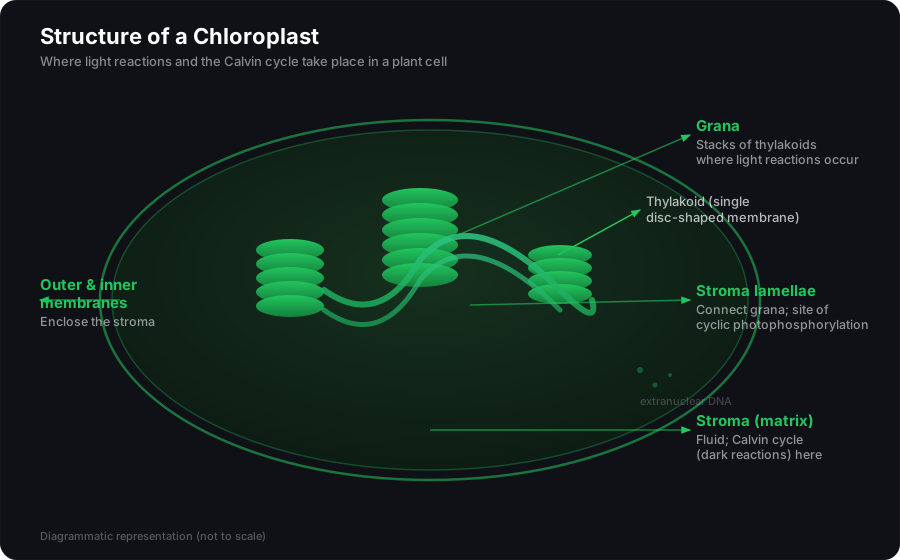
The term "dark reactions" should not be construed to mean that they occur in darkness or that they are not light-dependent. They are simply not directly driven by light, but depend on the products of light reactions (ATP and NADPH).
11.4 How Many Pigments Are Involved in Photosynthesis?
Looking at plants have you ever wondered why and how there are so many shades of green in their leaves — even in the same plant? We can look for an answer to this question by trying to separate the leaf pigments of any green plant through paper chromatography.
A chromatographic separation of the leaf pigments shows that the colour that we see in leaves is not due to a single pigment but due to four pigments:
Chlorophyll a
Bright or blue green in the chromatogram. This is the chief pigment associated with photosynthesis.
Chlorophyll b
Yellow green in the chromatogram. An accessory pigment that broadens the range of light absorption.
Xanthophylls
Yellow in colour. These accessory pigments absorb light and transfer energy to chlorophyll a.
Carotenoids
Yellow to yellow-orange. These accessory pigments also protect chlorophyll a from photo-oxidation.
Pigments are substances that have an ability to absorb light at specific wavelengths. Chlorophyll a is the most abundant plant pigment in the world. It shows maximum absorption in the blue and red regions of the visible spectrum, which also corresponds to the wavelengths at which maximum photosynthesis occurs.
The absorption spectrum of chlorophyll a and the action spectrum of photosynthesis show that most photosynthesis takes place in the blue and red regions of the spectrum. However, some photosynthesis does take place at the other wavelengths of the visible spectrum, thanks to the accessory pigments.
Though chlorophyll is the major pigment responsible for trapping light, other thylakoid pigments like chlorophyll b, xanthophylls and carotenoids, which are called accessory pigments, also absorb light and transfer the energy to chlorophyll a. Indeed, they not only enable a wider range of wavelength of incoming light to be utilised for photosynthesis but also protect chlorophyll a from photo-oxidation.
11.5 What Is Light Reaction?
Light reactions or the 'Photochemical' phase include light absorption, water splitting, oxygen release, and the formation of high-energy chemical intermediates, ATP and NADPH. Several protein complexes are involved in the process.
The pigments are organised into two discrete photochemical light harvesting complexes (LHC) within the Photosystem I (PS I) and Photosystem II (PS II). These are named in the sequence of their discovery, and not in the sequence in which they function during the light reaction.
Photosystem I (PS I)
The reaction centre chlorophyll a has an absorption peak at 700 nm, hence is called P700. It absorbs red light of 700 nm wavelength.
Photosystem II (PS II)
The reaction centre chlorophyll a has absorption maxima at 680 nm, and is called P680. It absorbs red light of 680 nm wavelength.
The LHC are made up of hundreds of pigment molecules bound to proteins. Each photosystem has all the pigments (except one molecule of chlorophyll a) forming a light harvesting system also called antennae. These pigments help to make photosynthesis more efficient by absorbing different wavelengths of light. The single chlorophyll a molecule forms the reaction centre.
11.6 The Electron Transport
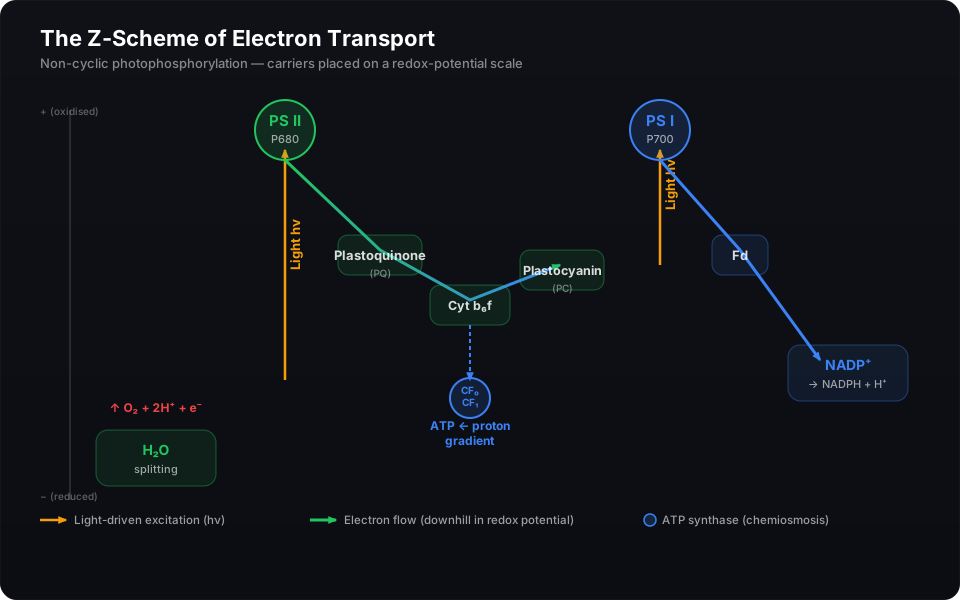
In photosystem II the reaction centre chlorophyll a absorbs 680 nm wavelength of red light causing electrons to become excited and jump into an orbit farther from the atomic nucleus. These electrons are picked up by an electron acceptor which passes them to an electron transport system consisting of cytochromes.
This movement of electrons is downhill, in terms of an oxidation-reduction or redox potential scale. The electrons are not used up as they pass through the electron transport chain, but are passed on to the pigments of photosystem PS I.
Simultaneously, electrons in the reaction centre of PS I are also excited when they receive red light of wavelength 700 nm and are transferred to another acceptor molecule that has a greater redox potential. These electrons then are moved downhill again, this time to a molecule of energy-rich NADP⁺. The addition of these electrons reduces NADP⁺ to NADPH + H⁺.
This whole scheme of transfer of electrons, starting from the PS II, uphill to the acceptor, down the electron transport chain to PS I, excitation of electrons, transfer to another acceptor, and finally downhill to NADP⁺ reducing it to NADPH + H⁺ is called the Z scheme, due to its characteristic shape. This shape is formed when all the carriers are placed in a sequence on a redox potential scale.
11.6.1 Splitting of Water
You would then ask, how does PS II supply electrons continuously? The electrons that were moved from photosystem II must be replaced. This is achieved by electrons available due to splitting of water. The splitting of water is associated with the PS II; water is split into 2H⁺, [O] and electrons. This creates oxygen, one of the net products of photosynthesis.
The water splitting complex is associated with the PS II, which itself is physically located on the inner side of the membrane of the thylakoid. The protons and O₂ formed are likely to be released in the lumen of the thylakoid.
11.6.2 Cyclic and Non-cyclic Photo-phosphorylation
Living organisms have the capability of extracting energy from oxidisable substances and store this in the form of bond energy. Special substances like ATP carry this energy in their chemical bonds. The process through which ATP is synthesised by cells (in mitochondria and chloroplasts) is named phosphorylation. Photo-phosphorylation is the synthesis of ATP from ADP and inorganic phosphate in the presence of light.
Non-cyclic Photo-phosphorylation
When the two photosystems work in a series — first PS II and then PS I — a process called non-cyclic photo-phosphorylation occurs. The two photosystems are connected through an electron transport chain, as seen in the Z scheme. Both ATP and NADPH + H⁺ are synthesised by this kind of electron flow.
Cyclic Photo-phosphorylation
When only PS I is functional, the electron is circulated within the photosystem and phosphorylation occurs due to cyclic flow of electrons. This occurs in the stroma lamellae. The cyclic flow results only in the synthesis of ATP, but not of NADPH + H⁺.
The stroma lamellae membranes lack PS II as well as NADP reductase enzyme. The excited electron does not pass on to NADP⁺ but is cycled back to the PS I complex through the electron transport chain. Cyclic photophosphorylation also occurs when only light of wavelengths beyond 680 nm are available for excitation.
11.6.3 Chemiosmotic Hypothesis
Let us now try and understand how ATP is synthesised in the chloroplast. The chemiosmotic hypothesis has been put forward to explain the mechanism. Like in respiration, in photosynthesis too, ATP synthesis is linked to development of a proton gradient across a membrane. This time these are the membranes of thylakoid. There is one difference though: here the proton accumulation is towards the inside of the membrane, i.e., in the lumen. In respiration, protons accumulate in the intermembrane space of the mitochondria.
What causes the proton gradient across the membrane? We need to consider the processes that take place during the activation of electrons and their transport:
- (a) Since splitting of the water molecule takes place on the inner side of the membrane, the protons or hydrogen ions that are produced by the splitting of water accumulate within the lumen of the thylakoids.
- (b) As electrons move through the photosystems, protons are transported across the membrane. This happens because the primary acceptor of electron which is located towards the outer side of the membrane transfers its electron not to an electron carrier but to an H carrier. This molecule removes a proton from the stroma while transporting an electron. When this molecule passes on its electron to the electron carrier on the inner side of the membrane, the proton is released into the inner side or the lumen side of the membrane.
- (c) The NADP reductase enzyme is located on the stroma side of the membrane. Along with electrons that come from the acceptor of electrons of PS I, protons are necessary for the reduction of NADP⁺ to NADPH + H⁺. These protons are also removed from the stroma.
Hence, within the chloroplast, protons in the stroma decrease in number, while in the lumen there is accumulation of protons. This creates a proton gradient across the thylakoid membrane as well as a measurable decrease in pH in the lumen.
The gradient is broken down due to the movement of protons across the membrane to the stroma through the transmembrane channel of the CF₀ of the ATP synthase. The ATP synthase enzyme consists of two parts: CF₀ is embedded in the thylakoid membrane and forms a transmembrane channel that carries out facilitated diffusion of protons across the membrane. The other portion is called CF₁ and protrudes on the outer surface of the thylakoid membrane on the side that faces the stroma. The breakdown of the gradient provides enough energy to cause a conformational change in the CF₁ particle, which makes the enzyme synthesise several molecules of energy-packed ATP.
Chemiosmosis requires a membrane, a proton pump, a proton gradient and ATP synthase. Energy is used to pump protons across a membrane, to create a gradient or a high concentration of protons within the thylakoid lumen. ATP synthase has a channel that allows diffusion of protons back across the membrane; this releases enough energy to activate ATP synthase enzyme that catalyses the formation of ATP.
Along with the NADPH produced by the movement of electrons, the ATP will be used immediately in the biosynthetic reaction taking place in the stroma, responsible for fixing CO₂, and synthesis of sugars.
11.7 Where Are the ATP and NADPH Used?
We learnt that the products of light reaction are ATP, NADPH and O₂. Of these O₂ diffuses out of the chloroplast while ATP and NADPH are used to drive the processes leading to the synthesis of food — more accurately, sugars. This is the biosynthetic phase of photosynthesis.
This process does not directly depend on the presence of light but is dependent on the products of the light reaction, i.e., ATP and NADPH, besides CO₂ and H₂O. You may wonder how this could be verified; it is simple: immediately after light becomes unavailable, the biosynthetic process continues for some time, and then stops. If then, light is made available, the synthesis starts again. Can we, hence, say that calling the biosynthetic phase as the dark reaction is a misnomer?
Let us now see how the ATP and NADPH are used in the biosynthetic phase. We saw earlier that CO₂ is combined with H₂O to produce (CH₂O)ₙ or sugars. It was of interest to scientists to find out how this reaction proceeded, or rather what was the first product formed when CO₂ is taken into a reaction or fixed.
Just after World War II, among the several efforts to put radioisotopes to beneficial use, the work of Melvin Calvin led to the discovery that the first product of CO₂ fixation was a 3-carbon organic acid — 3-phosphoglyceric acid or PGA. Scientists also tried to know whether all plants have PGA as the first product of CO₂ fixation, or whether any other product was formed in other plants.
Experiments conducted over a wide range of plants led to the discovery of another group of plants, where the first stable product of CO₂ fixation was again an organic acid, but one which had 4 carbon atoms in it. This acid was identified to be oxaloacetic acid or OAA. Since then CO₂ assimilation during photosynthesis was said to be of two main types:
C3 Pathway
Plants in which the first product of CO₂ fixation is a C3 acid (PGA). The primary acceptor is RuBP and the pathway is also called the Calvin cycle.
C4 Pathway
Plants in which the first product was a C4 acid (OAA). These plants use PEP as the primary acceptor and have a special leaf anatomy called Kranz anatomy.
11.7.1 The Primary Acceptor of CO₂
How many carbon atoms would a molecule have which after accepting (fixing) CO₂, would have 3 carbons (of PGA)? The studies very unexpectedly showed that the acceptor molecule was a 5-carbon ketose sugar — ribulose bisphosphate (RuBP). The scientists also believed that since the first product was a C3 acid, the primary acceptor would be a 2-carbon compound; they spent many years trying to identify a 2-carbon compound before they discovered the 5-carbon RuBP.
11.7.2 The Calvin Cycle
Calvin and his co-workers then worked out the whole pathway and showed that the pathway operated in a cyclic manner; the RuBP was regenerated. The Calvin pathway occurs in all photosynthetic plants; it does not matter whether they have C3 or C4 (or any other) pathways.
For ease of understanding, the Calvin cycle can be described under three stages:
Carboxylation
Carboxylation is the fixation of CO₂ into a stable organic intermediate. This is the most crucial step of the Calvin cycle where CO₂ is utilised for the carboxylation of RuBP. This reaction is catalysed by the enzyme RuBP carboxylase which results in the formation of two molecules of 3-PGA.
Reduction
These are a series of reactions that lead to the formation of glucose. The steps involve utilisation of 2 molecules of ATP for phosphorylation and 2 of NADPH for reduction per CO₂ molecule fixed. The fixation of six molecules of CO₂ and 6 turns of the cycle are required for the formation of one molecule of glucose.
Regeneration
Regeneration of the CO₂ acceptor molecule RuBP is crucial if the cycle is to continue uninterrupted. The regeneration steps require one ATP for phosphorylation to form RuBP.
Hence for every CO₂ molecule entering the Calvin cycle, 3 molecules of ATP and 2 of NADPH are required. To make one molecule of glucose, 6 turns of the cycle are required.
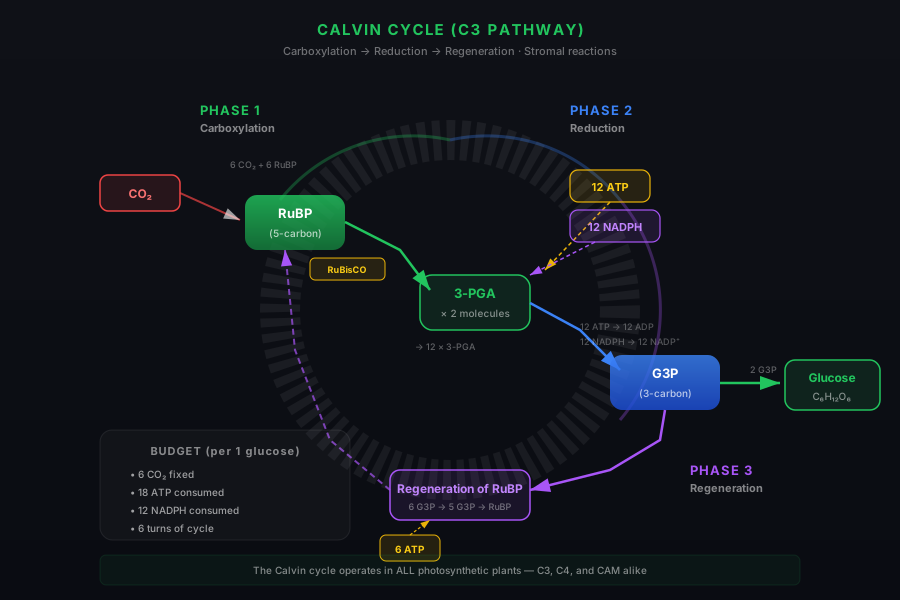
| Input | Output |
|---|---|
| Six CO₂ | One glucose |
| 18 ATP | 18 ADP |
| 12 NADPH | 12 NADP⁺ |
11.8 The C4 Pathway
Plants that are adapted to dry tropical regions have the C4 pathway mentioned earlier. Though these plants have the C4 oxaloacetic acid as the first CO₂ fixation product they use the C3 pathway or the Calvin cycle as the main biosynthetic pathway. Then, in what way are they different from C3 plants?
C4 plants have a special type of leaf anatomy, they tolerate higher temperatures, they show a response to high light intensities, they lack a process called photorespiration and have greater productivity of biomass.
Kranz Anatomy
The particularly large cells around the vascular bundles of the C4 plants are called bundle sheath cells, and the leaves which have such anatomy are said to have 'Kranz' anatomy. 'Kranz' means 'wreath' and is a reflection of the arrangement of cells. The bundle sheath cells may form several layers around the vascular bundles; they are characterised by having a large number of chloroplasts, thick walls impervious to gaseous exchange and no intercellular spaces.
You may like to cut a section of the leaves of C4 plants — maize or sorghum — to observe the Kranz anatomy and the distribution of mesophyll cells.
The Hatch and Slack Pathway
This pathway that has been named the Hatch and Slack Pathway, is again a cyclic process. Let us study the pathway by listing the steps:
- The primary CO₂ acceptor is a 3-carbon molecule phosphoenol pyruvate (PEP) and is present in the mesophyll cells. The enzyme responsible for this fixation is PEP carboxylase or PEPcase. It is important to register that the mesophyll cells lack RuBisCO enzyme.
- The C4 acid OAA is formed in the mesophyll cells. It then forms other 4-carbon compounds like malic acid or aspartic acid in the mesophyll cells itself, which are transported to the bundle sheath cells.
- In the bundle sheath cells these C4 acids are broken down to release CO₂ and a 3-carbon molecule.
- The 3-carbon molecule is transported back to the mesophyll where it is converted to PEP again, thus completing the cycle.
- The CO₂ released in the bundle sheath cells enters the C3 or the Calvin pathway, a pathway common to all plants. The bundle sheath cells are rich in the enzyme Ribulose bisphosphate carboxylase-oxygenase (RuBisCO), but lack PEPcase.
The basic pathway that results in the formation of the sugars, the Calvin pathway, is common to the C3 and C4 plants. The Calvin pathway occurs in all the mesophyll cells of the C3 plants. In the C4 plants it does not take place in the mesophyll cells but does so only in the bundle sheath cells.
11.9 Photorespiration
Let us try and understand one more process that creates an important difference between C3 and C4 plants — Photorespiration. To understand photorespiration we have to know a little bit more about the first step of the Calvin pathway — the first CO₂ fixation step.
RuBisCO that is the most abundant enzyme in the world is characterised by the fact that its active site can bind to both CO₂ and O₂ — hence the name. RuBisCO has a much greater affinity for CO₂ when the CO₂ : O₂ ratio is nearly equal. This binding is competitive. It is the relative concentration of O₂ and CO₂ that determines which of the two will bind to the enzyme.
In C3 plants some O₂ does bind to RuBisCO, and hence CO₂ fixation is decreased. Here the RuBP instead of being converted to 2 molecules of PGA binds with O₂ to form one molecule of phosphoglycerate and phosphoglycolate (2 Carbon) in a pathway called photorespiration. In the photorespiratory pathway, there is neither synthesis of sugars, nor of ATP. Rather it results in the release of CO₂ with the utilisation of ATP. In the photorespiratory pathway there is no synthesis of ATP or NADPH. The biological function of photorespiration is not known yet.
In C4 plants photorespiration does not occur. This is because they have a mechanism that increases the concentration of CO₂ at the enzyme site. This takes place when the C4 acid from the mesophyll is broken down in the bundle sheath cells to release CO₂ — this results in increasing the intracellular concentration of CO₂. In turn, this ensures that the RuBisCO functions as a carboxylase minimising the oxygenase activity.
C3 vs C4 Plants — Comparison Table
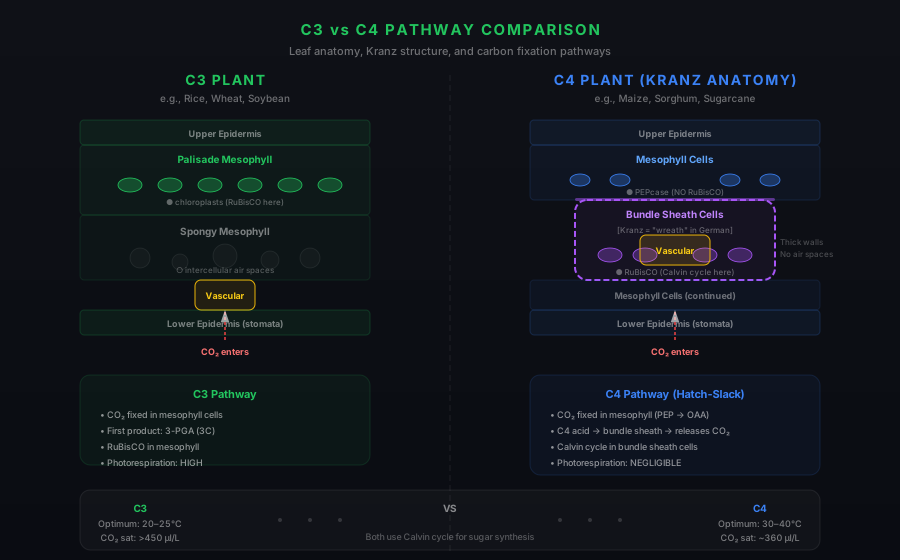
| Characteristic | C3 Plants | C4 Plants |
|---|---|---|
| Cell type in which Calvin cycle takes place | Mesophyll | Bundle sheath |
| Cell type in which initial carboxylation occurs | Mesophyll | Mesophyll |
| Number of cell types that fix CO₂ | One: Mesophyll | Two: Bundle sheath and mesophyll |
| Primary CO₂ acceptor | RuBP | PEP |
| Carbons in primary CO₂ acceptor | 5 | 3 |
| Primary CO₂ fixation product | PGA (3C) | OAA (4C) |
| Has RuBisCO? | Yes | Yes |
| Has PEPcase? | No | Yes |
| Cells with RuBisCO | Mesophyll | Bundle sheath |
| CO₂ fixation rate at high light | Low | High |
| Photorespiration at high light | High | Negligible |
| Temperature optimum | 20–25°C | 30–40°C |
| Examples | Rice, Wheat, Soybean, Potato | Maize, Sorghum, Sugarcane |
11.10 Factors Affecting Photosynthesis
An understanding of the factors that affect photosynthesis is necessary. The rate of photosynthesis is very important in determining the yield of plants including crop plants. Photosynthesis is under the influence of several factors, both internal (plant) and external.
Internal (Plant) Factors
- Number, size, age and orientation of leaves
- Mesophyll cells and chloroplasts
- Internal CO₂ concentration
- Amount of chlorophyll
External Factors
- Availability of sunlight
- Temperature
- CO₂ concentration
- Water
As a plant photosynthesises, all these factors will simultaneously affect its rate. Hence, though several factors interact and simultaneously affect photosynthesis or CO₂ fixation, usually one factor is the major cause or is the one that limits the rate. Hence, at any point the rate will be determined by the factor available at sub-optimal levels.
When several factors affect any [bio]chemical process, this law states: "If a chemical process is affected by more than one factor, then its rate will be determined by the factor which is nearest to its minimal value: it is the factor which directly affects the process if its quantity is changed."
For example, despite the presence of a green leaf and optimal light and CO₂ conditions, the plant may not photosynthesise if the temperature is very low. This leaf, if given the optimal temperature, will start photosynthesising.
11.10.1 Light
We need to distinguish between light quality, light intensity and the duration of exposure to light, while discussing light as a factor that affects photosynthesis. There is a linear relationship between incident light and CO₂ fixation rates at low light intensities. At higher light intensities, gradually the rate does not show further increase as other factors become limiting.
What is interesting to note is that light saturation occurs at 10 per cent of the full sunlight. Hence, except for plants in shade or in dense forests, light is rarely a limiting factor in nature. Increase in incident light beyond a point causes the breakdown of chlorophyll and a decrease in photosynthesis.
11.10.2 Carbon Dioxide Concentration
Carbon dioxide is the major limiting factor for photosynthesis. The concentration of CO₂ is very low in the atmosphere (between 0.03 and 0.04 per cent). Increase in concentration up to 0.05 per cent can cause an increase in CO₂ fixation rates; beyond this the levels can become damaging over longer periods.
The C3 and C4 plants respond differently to CO₂ concentrations. At low light conditions neither group responds to high CO₂ conditions. At high light intensities, both C3 and C4 plants show increase in the rates of photosynthesis. What is important to note is that the C4 plants show saturation at about 360 µl L⁻¹ while C3 responds to increased CO₂ concentration and saturation is seen only beyond 450 µl L⁻¹. Thus, current availability of CO₂ levels is limiting to the C3 plants.
The fact that C3 plants respond to higher CO₂ concentration by showing increased rates of photosynthesis leading to higher productivity has been used for some greenhouse crops such as tomatoes and bell pepper. They are allowed to grow in carbon dioxide enriched atmospheres that lead to higher yields.
11.10.3 Temperature
The dark reactions being enzymatic are temperature controlled. Though the light reactions are also temperature sensitive they are affected to a much lesser extent. The C4 plants respond to higher temperatures and show higher rate of photosynthesis while C3 plants have a much lower temperature optimum.
The temperature optimum for photosynthesis of different plants also depends on the habitat that they are adapted to. Tropical plants have a higher temperature optimum than the plants adapted to temperate climates.
11.10.4 Water
Even though water is one of the reactants in the light reaction, the effect of water as a factor is more through its effect on the plant, rather than directly on photosynthesis. Water stress causes the stomata to close hence reducing the CO₂ availability. Besides, water stress also makes leaves wilt, thus reducing the surface area of the leaves and their metabolic activity as well.
11.11 Summary
• Green plants make their own food by photosynthesis. During this process carbon dioxide from the atmosphere is taken in by leaves through stomata and used for making carbohydrates, principally glucose and starch.
• Photosynthesis takes place only in the green parts of the plants, mainly the leaves. Within the leaves, the mesophyll cells have a large number of chloroplasts that are responsible for CO₂ fixation.
• Within the chloroplasts, the membranes are sites for the light reaction, while the chemosynthetic pathway occurs in the stroma. Photosynthesis has two stages: the light reaction and the carbon fixing reactions.
• In the light reaction the light energy is absorbed by the pigments present in the antenna, and funnelled to special chlorophyll a molecules called reaction centre chlorophylls. There are two photosystems, PS I and PS II. PS I has a 700 nm absorbing chlorophyll a P700 molecule at its reaction centre, while PS II has a P680 reaction centre that absorbs red light at 680 nm.
• After absorbing light, electrons are excited and transferred through PS II and PS I and finally to NADP forming NADPH. During this process a proton gradient is created across the membrane of the thylakoid. The breakdown of the proton gradient due to movement through the F₀ part of the ATPase enzyme releases enough energy for synthesis of ATP.
• Splitting of water molecules is associated with PS II resulting in the release of O₂, protons and transfer of electrons to PS II.
• In the carbon fixation cycle, CO₂ is added by the enzyme RuBisCO to a 5-carbon compound RuBP that is converted to 2 molecules of 3-carbon PGA. This is then converted to sugar by the Calvin cycle, and the RuBP is regenerated. During this process ATP and NADPH synthesised in the light reaction are utilised.
• RuBisCO also catalyses a wasteful oxygenation reaction in C3 plants: photorespiration.
• Some tropical plants show a special type of photosynthesis called C4 pathway. In these plants the first product of CO₂ fixation that takes place in the mesophyll is a 4-carbon compound. In the bundle sheath cells the Calvin pathway is carried out for the synthesis of carbohydrates.