Biomolecules
Understanding the organic and inorganic chemistry of living organisms — the molecules that make life possible
In this chapter
There is a remarkable diversity of living organisms across our biosphere, yet an equally fascinating question emerges: Are all living beings constructed from the same fundamental chemicals? When we perform elemental analysis on a piece of plant tissue, animal tissue, or microbial paste, we obtain a list of elements — carbon, hydrogen, oxygen, and several others — along with their relative concentrations per unit mass of living matter.
If we repeat the same analysis on a sample of the earth's crust, we obtain a surprisingly similar list. The key difference is not in which elements are present, but in their relative abundance. In living organisms, the proportion of carbon and hydrogen is far higher than in non-living earth materials. This elevated carbon and hydrogen content forms the chemical backbone of all life.
Living organisms are chemically distinct from non-living matter not because they contain different elements, but because of the disproportionate abundance of carbon and hydrogen relative to other elements. This is what makes organic chemistry the foundation of biology.
9.1 How to Analyse Chemical Composition?
To discover what types of organic compounds exist in living organisms, we can take any living tissue — a vegetable piece, a fragment of liver, or similar — and grind it in trichloroacetic acid (Cl3CCOOH) using a mortar and pestle. This creates a thick slurry. When strained through cheesecloth or cotton, two distinct fractions emerge.
Acid-Soluble Pool (Filtrate)
The liquid that passes through the filter. Contains thousands of low molecular weight organic compounds, including amino acids, sugars, fatty acids, nucleotides, and many more small molecules.
Acid-Insoluble Fraction (Retentate)
The material retained by the filter. Contains only four classes of organic compounds: proteins, nucleic acids, polysaccharides, and lipids — all macromolecules.
All carbon compounds obtained from living tissues are broadly referred to as biomolecules. However, living organisms also contain inorganic elements and compounds. To demonstrate this, we perform a destructive experiment: weigh a small amount of living tissue (its wet weight), then dry it completely. All water evaporates, leaving behind the dry weight. If the tissue is fully combusted, all carbon compounds are oxidised to gaseous forms (CO₂, water vapour) and escape. The residue is called ash, which contains inorganic elements like calcium, magnesium, sulphate, phosphate, and others.
Elemental analysis reveals the elemental composition of living tissues (hydrogen, oxygen, chlorine, carbon, etc.), while compound analysis identifies the organic constituents (amino acids, nucleotide bases, fatty acids) and inorganic constituents (ions, water, salts) present.
Amino Acids
Amino acids are organic compounds that contain both an amino group (–NH₂) and a carboxyl group (–COOH) attached to the same carbon atom — the α-carbon. They are essentially substituted methane molecules with four different substituents occupying the four valency positions: a hydrogen atom, a carboxyl group, an amino group, and a variable side chain designated as the R group.
Based on the nature of the R group, many different amino acids exist. However, only twenty types of amino acids occur naturally in proteins. The R group can be as simple as a hydrogen atom (as in glycine), a methyl group (alanine), or a hydroxy methyl group (serine), among others.
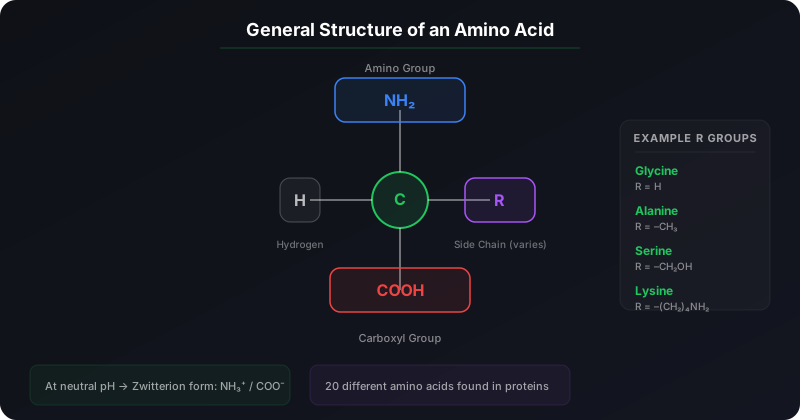
The chemical and physical properties of amino acids are dictated by their amino, carboxyl, and R functional groups. Based on the number of amino and carboxyl groups, amino acids are classified as:
- Acidic amino acids — e.g., glutamic acid (extra carboxyl group)
- Basic amino acids — e.g., lysine (extra amino group)
- Neutral amino acids — e.g., valine (balanced groups)
There are also aromatic amino acids such as tyrosine, phenylalanine, and tryptophan. A crucial property of amino acids is the ionizable nature of the –NH₂ and –COOH groups. At different pH values, the structure of amino acids changes — the zwitterionic form (B) arises when both groups are ionized simultaneously.
Lipids
Lipids are generally water-insoluble compounds. The simplest lipids are fatty acids — molecules where a carboxyl group is attached to a hydrocarbon chain (R group). The R group can be a methyl (–CH₃), ethyl (–C₂H₅), or a chain of up to 19 –CH₂ groups. For instance, palmitic acid contains 16 carbons (including the carboxyl carbon), while arachidonic acid has 20 carbons.
Fatty acids are classified as:
- Saturated — without any carbon-carbon double bonds
- Unsaturated — containing one or more C=C double bonds
Another simple lipid is glycerol, a trihydroxy propane. Many lipids contain both glycerol and fatty acids, where the fatty acids are esterified to glycerol. Depending on the number of fatty acid chains, these are called monoglycerides, diglycerides, and triglycerides. The latter are also known as fats and oils, distinguished by their melting points — oils have lower melting points (e.g., gingelly oil) and remain liquid in cold temperatures.
Some lipids contain phosphorus and a phosphorylated organic compound; these are phospholipids, found prominently in cell membranes. Lecithin is a well-known example. Neural tissues contain lipids with particularly complex structures, while cholesterol is another important lipid molecule.
Nitrogen Bases, Nucleosides & Nucleotides
Living organisms possess numerous carbon compounds containing heterocyclic rings. Some of these are nitrogenous bases: adenine, guanine, cytosine, uracil, and thymine. When a nitrogenous base is attached to a sugar molecule, the resulting compound is called a nucleoside. If a phosphate group is also esterified to the sugar, the compound becomes a nucleotide.
| Nucleosides | Corresponding Nucleotides |
|---|---|
| Adenosine | Adenylic acid |
| Guanosine | Guanylic acid |
| Thymidine | Thymidylic acid |
| Uridine | Uridylic acid |
| Cytidine | Cytidylic acid |
The nucleic acids — DNA and RNA — are polymers of nucleotides and function as the genetic material of organisms.
| Element | Earth's Crust (% weight) | Human Body (% weight) |
|---|---|---|
| Hydrogen (H) | 0.14 | 9.5 |
| Carbon (C) | 0.03 | 18.5 |
| Oxygen (O) | 46.6 | 65.0 |
| Nitrogen (N) | Very little | 3.3 |
| Sulphur (S) | 0.03 | 0.3 |
| Sodium (Na) | 2.8 | 0.2 |
| Calcium (Ca) | 3.6 | 1.5 |
| Magnesium (Mg) | 2.1 | 0.1 |
| Silicon (Si) | 27.7 | Negligible |
| Inorganic Component | Formula |
|---|---|
| Sodium | Na⁺ |
| Potassium | K⁺ |
| Calcium | Ca²⁺ |
| Magnesium | Mg²⁺ |
| Water | H₂O |
| Compounds | NaCl, CaCO₃, PO₄³⁻, SO₄²⁻ |
9.2 Primary and Secondary Metabolites
The most exciting aspect of chemistry involves isolating thousands of compounds — large and small — from living organisms, determining their structures, and, when possible, synthesising them in the laboratory.
If one were to compile a comprehensive list of biomolecules from any living cell, the list would include thousands of organic compounds such as amino acids, sugars, and others. For reasons explained later in this chapter (Section 9.10), these can all be called metabolites. In animal tissues, one encounters all the categories of compounds shown in the molecular diagrams — these are primary metabolites.
However, when we examine plant, fungal, and microbial cells, we find thousands of additional compounds beyond the primary metabolites. These are called secondary metabolites.
| Category | Examples |
|---|---|
| Pigments | Carotenoids, Anthocyanins, etc. |
| Alkaloids | Morphine, Codeine, etc. |
| Terpenoides | Monoterpenes, Diterpenes, etc. |
| Essential oils | Lemon grass oil, etc. |
| Toxins | Abrin, Ricin |
| Lectins | Concanavalin A |
| Drugs | Vinblastin, Curcumin, etc. |
| Polymeric substances | Rubber, Gums, Cellulose |
Primary metabolites have clearly identifiable functions and play known roles in normal physiological processes — think amino acids, sugars, and nucleotides. Secondary metabolites lack universally understood roles in the host organism's physiology, but many are extremely useful to humans — rubber, drugs, spices, scents, pigments, antibiotics, and more. Some secondary metabolites also serve important ecological functions.
9.3 Biomacromolecules
All compounds found in the acid-soluble pool share a common feature: they have molecular weights ranging from approximately 18 to around 800 daltons (Da). In contrast, the acid-insoluble fraction contains only four types of organic compounds — proteins, nucleic acids, polysaccharides, and lipids. With the exception of lipids, these macromolecules have molecular weights of ten thousand daltons and above.
This distinction gives us two broad categories of biomolecules:
- Micromolecules (biomolecules) — molecular weight less than 1,000 Da, found in the acid-soluble pool
- Macromolecules (biomacromolecules) — molecular weight of 10,000 Da and above, found in the acid-insoluble fraction
The molecules in the insoluble fraction (except lipids) are polymeric substances. But why do lipids, whose molecular weights do not exceed 800 Da, appear in the macromolecular fraction? Lipids are indeed small molecular weight compounds, but they are present not only as free molecules but also organised into structural arrangements like cell membranes and other membranous organelles. When tissue is ground, cell membranes are disrupted into vesicles that are not water-soluble. These membrane fragments separate along with the acid-insoluble pool, hence appearing in the macromolecular fraction. It is important to note that lipids are not strictly macromolecules.
The acid-soluble pool roughly represents the cytoplasmic composition, while macromolecules from cytoplasm and organelles form the acid-insoluble fraction. Together, they represent the entire chemical composition of living tissues.
| Component | % of Total Cellular Mass |
|---|---|
| Water | 70–90 |
| Proteins | 10–15 |
| Carbohydrates | 3 |
| Lipids | 2 |
| Nucleic acids | 5–7 |
| Ions | 1 |
Water is by far the most abundant chemical in living organisms, constituting 70–90% of total cellular mass. Proteins rank second at 10–15%, followed by nucleic acids at 5–7%.
9.4 Proteins
Proteins are polypeptides — linear chains of amino acids linked together by peptide bonds. Each protein is a polymer of amino acids. Since there are 20 different types of amino acids (alanine, cysteine, proline, tryptophan, lysine, and others), a protein is a heteropolymer, not a homopolymer. A homopolymer repeats a single monomer type many times, whereas a heteropolymer is built from multiple different monomers.
This amino acid composition is nutritionally significant. Certain amino acids are essential for human health and must be obtained through our diet — dietary proteins are the source of these essential amino acids. Other amino acids are non-essential because the body can synthesise them internally.
Proteins carry out a vast array of functions in living organisms. Some transport nutrients across cell membranes, some fight infectious agents, some act as hormones, and many serve as enzymes.
| Protein | Function |
|---|---|
| Collagen | Intercellular ground substance |
| Trypsin | Enzyme |
| Insulin | Hormone |
| Antibody | Fights infectious agents |
| Receptor | Sensory reception (smell, taste, hormone, etc.) |
| GLUT-4 | Enables glucose transport into cells |
Collagen is the most abundant protein in the animal world. Ribulose bisphosphate Carboxylase-Oxygenase (RuBisCO) is the most abundant protein in the entire biosphere — it catalyses the crucial first step of carbon fixation in photosynthesis.
9.5 Polysaccharides
The acid-insoluble fraction also contains polysaccharides (carbohydrates) as another major class of macromolecules. Polysaccharides are long chains of sugars — essentially threads (like cotton threads) composed of different monosaccharides as building blocks.
Cellulose
A polymeric polysaccharide made of only one type of monosaccharide — glucose. It is a homopolymer. Plant cell walls are made of cellulose. Paper and cotton fibre are cellulosic materials.
Starch
A variant of glucose polymer that serves as the energy storehouse in plant tissues. Starch forms helical secondary structures and can hold iodine (I₂) molecules in its helical portions, producing a characteristic blue colour.
Glycogen
The animal equivalent of starch — a branched glucose polymer that serves as energy storage in animal tissues. The right end is the reducing end and the left end is the non-reducing end, with branches along the chain.
Inulin
A polymer of fructose rather than glucose, found in certain plant tissues.
Starch forms helical structures that can trap iodine molecules, producing a deep blue colour. Cellulose, in contrast, does not contain complex helices and therefore cannot hold iodine — which is why cellulose does not turn blue with iodine test.
Beyond these simpler polysaccharides, nature also produces more complex forms. These contain amino-sugars and chemically modified sugars as building blocks — for example, glucosamine and N-acetyl galactosamine. The exoskeletons of arthropods contain a complex polysaccharide called chitin. These complex polysaccharides are mostly homopolymers.
9.6 Nucleic Acids
The other major macromolecule found in the acid-insoluble fraction of any living tissue is nucleic acid. Along with polysaccharides and polypeptides, nucleic acids constitute the true macromolecular fraction of living cells. Nucleic acids are polynucleotides — polymers of nucleotide building blocks.

Each nucleotide has three chemically distinct components:
- A heterocyclic compound (nitrogenous base)
- A monosaccharide (pentose sugar)
- A phosphoric acid (phosphate group)
The heterocyclic compounds in nucleic acids are the nitrogenous bases: adenine and guanine (substituted purines) and uracil, cytosine, and thymine (substituted pyrimidines). The skeletal heterocyclic rings are called purine and pyrimidine, respectively.
The sugar in polynucleotides is either ribose (a pentose monosaccharide) or 2'-deoxyribose. A nucleic acid containing deoxyribose is called deoxyribonucleic acid (DNA), while one containing ribose is called ribonucleic acid (RNA). Both DNA and RNA function as genetic material, carrying hereditary information from parents to offspring.
9.7 Structure of Proteins
Proteins, as discussed earlier, are heteropolymers containing strings of amino acids. The concept of "structure" in proteins operates at multiple levels. While organic chemists typically draw two-dimensional representations of molecules, biologists describe protein structure at four distinct levels.
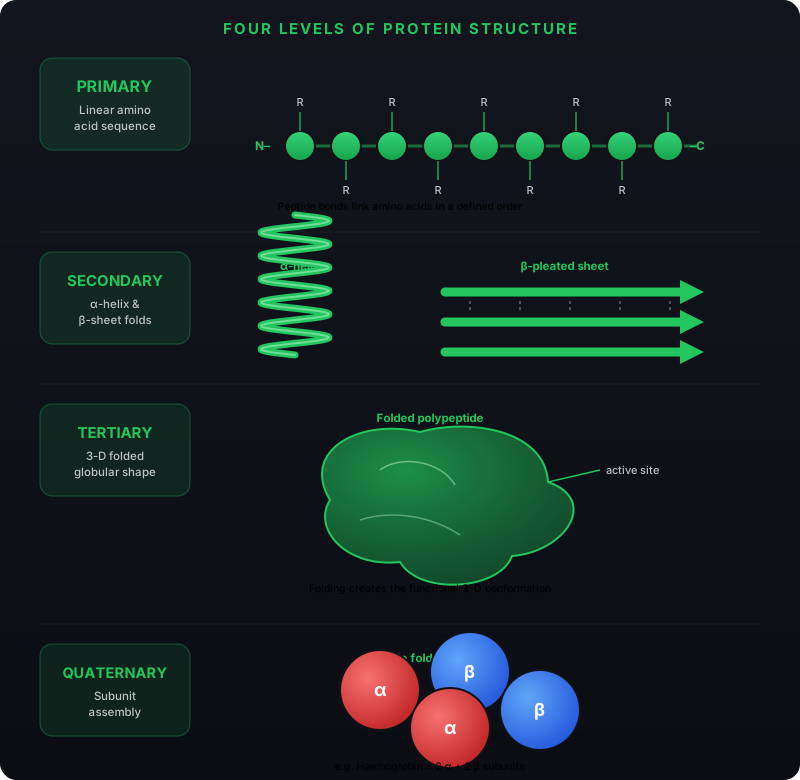
In the primary structure, the protein is imagined as a line: the left end is the first amino acid (the N-terminal amino acid) and the right end is the last amino acid (the C-terminal amino acid). The sequence of amino acids in this chain constitutes the primary structure.
The protein thread does not remain as an extended rigid rod throughout. Portions of the thread are arranged as helices (secondary structure), while other regions fold into different configurations. The overall folding creates the tertiary structure — a three-dimensional shape that is essential for protein function.
Some proteins are assemblies of more than one polypeptide or subunit. The way these individual folded subunits are arranged with respect to each other constitutes the quaternary structure. For example, adult human haemoglobin consists of four subunits — two α-type subunits and two β-type subunits arranged together.
Human haemoglobin (Hb) is a classic example of quaternary structure. It contains 4 subunits: 2 identical α subunits and 2 identical β subunits, working together to carry oxygen in the blood.
9.8 Enzymes
Almost all enzymes are proteins, though some nucleic acids that behave like enzymes exist — these are called ribozymes. An enzyme, like any protein, has primary, secondary, and tertiary structures. When we examine the tertiary structure, the polypeptide chain criss-crosses itself, creating many crevices or pockets. One such pocket is the active site — the region into which the substrate fits. Through their active sites, enzymes catalyse reactions at remarkably high rates.
Enzyme catalysts differ fundamentally from inorganic catalysts in one critical way: while inorganic catalysts work efficiently at high temperatures and pressures, enzymes become damaged at high temperatures (above approximately 40°C). However, enzymes isolated from organisms living under extreme heat — such as those found near hot vents and sulphur springs — remain stable and retain catalytic power even at 80°–90°C. This thermal stability is a defining quality of enzymes from thermophilic organisms.
9.8.1 Chemical Reactions
Chemical compounds undergo two types of changes. Physical changes involve a change in shape without breaking bonds, or a change in the state of matter (ice melting to water, water becoming vapour). Chemical reactions involve breaking and forming bonds during transformation. For example:
Ba(OH)₂ + H₂SO₄ → BaSO₄ + 2H₂O (inorganic reaction)
Hydrolysis of starch into glucose (organic reaction)
The rate of a physical or chemical process is the amount of product formed per unit time, expressed as rate = δP/δt. A general rule of thumb is that rate doubles or halves for every 10°C change in temperature. Catalysed reactions proceed at vastly higher rates than uncatalysed ones.
CO₂ + H₂O → H₂CO₃ (carbon dioxide + water → carbonic acid)
Without any enzyme, this reaction is very slow — about 200 molecules of H₂CO₃ form per hour. With the enzyme carbonic anhydrase present in the cytoplasm, the reaction speeds up dramatically: about 600,000 molecules form every second. The enzyme accelerates the reaction rate by approximately 10 million times!
There are thousands of types of enzymes, each catalysing a unique chemical or metabolic reaction. A multistep chemical reaction, where each step is catalysed by the same enzyme complex or by different enzymes, is called a metabolic pathway. For example:
Glucose → 2 Pyruvic acid
C₆H₁₂O₆ + O₂ → 2C₃H₄O₃ + 2H₂O
This pathway involves ten different enzyme-catalysed reactions. Depending on conditions, the same pathway yields different end products: lactic acid in skeletal muscle under anaerobic conditions, pyruvic acid under normal aerobic conditions, and ethanol in yeast during fermentation.
9.8.2 How Do Enzymes Bring About Such High Rates?
To understand this, we must study enzymes in more detail. The chemical converted into a product is called the substrate (S). Enzymes (E) with their three-dimensional structures, including an active site, convert substrate into product (P): S → P.
The substrate must bind to the enzyme at its active site within a given cleft or pocket. The substrate diffuses towards the active site, and an obligatory enzyme-substrate (ES) complex forms. This complex is a transient phenomenon. While the substrate is bound to the enzyme's active site, a new structure of the substrate — the transition state — is formed. After bond breaking and making is completed, the product is released from the active site.
The transformation from substrate to product must pass through the transition state. There may be many intermediate structural states between the stable substrate and the product, all of which are unstable. The energy difference between the substrate and the transition state is the activation energy. Enzymes dramatically lower this energy barrier, making the transition from S to P much easier.
The y-axis represents potential energy content, while the x-axis represents the progression of structural transformation through the transition state. Whether the reaction is exothermic (product at lower energy than substrate) or endothermic, the substrate must always pass through a higher-energy transition state. Enzymes reduce this barrier without altering the overall energy change of the reaction.
9.8.3 Nature of Enzyme Action
Each enzyme has a substrate binding site that produces a highly reactive enzyme-substrate (ES) complex. This complex is short-lived and dissociates into product(s) and the unchanged enzyme, with intermediate formation of an enzyme-product (EP) complex. The formation of the ES complex is essential for catalysis:
The catalytic cycle proceeds through these steps:
- Step 1: The substrate binds to the active site of the enzyme, fitting into it
- Step 2: Binding induces the enzyme to alter its shape, fitting more tightly around the substrate
- Step 3: The active site, now in close proximity to the substrate, breaks the chemical bonds and forms the new enzyme-product complex
- Step 4: The enzyme releases the products and becomes free to bind another substrate molecule and repeat the catalytic cycle
9.8.4 Factors Affecting Enzyme Activity
Enzyme activity can be affected by changes in conditions that alter the tertiary structure of the protein. These include temperature, pH, substrate concentration, and the binding of specific regulatory chemicals.
Temperature & pH
Enzymes function in a narrow range of temperature and pH. Each enzyme shows highest activity at a particular optimum temperature and optimum pH. Activity declines above and below these values. Low temperature preserves enzymes in a temporarily inactive state, while high temperature denatures them irreversibly.
Substrate Concentration
As substrate concentration increases, the reaction velocity rises initially, then reaches a maximum velocity (Vmax). No further increase in substrate concentration exceeds Vmax because all enzyme molecules become saturated — there are no free enzyme molecules to bind additional substrate.
When a specific chemical binds to an enzyme and shuts off its activity, the process is called inhibition and the chemical is an inhibitor. A competitive inhibitor closely resembles the substrate in molecular structure and competes for the substrate-binding site. For example, malonate inhibits succinic dehydrogenase because it closely resembles the substrate succinate. Such competitive inhibitors are often used in controlling bacterial pathogens.
9.8.5 Classification and Nomenclature of Enzymes
Thousands of enzymes have been discovered, isolated, and studied. Most have been classified into groups based on the type of reactions they catalyse. Enzymes are divided into 6 classes, each with 4–13 subclasses, and named by a four-digit number.
| Class | Reaction Catalysed |
|---|---|
| Oxidoreductases / Dehydrogenases | Oxidoreduction between two substrates S and S': Sreduced + S'oxidised → Soxidised + S'reduced |
| Transferases | Transfer of a group G (other than hydrogen) between a pair of substrates: S–G + S' → S + S'–G |
| Hydrolases | Hydrolysis of ester, ether, peptide, glycosidic, C–C, C–halide, or P–N bonds |
| Lyases | Removal of groups from substrates by mechanisms other than hydrolysis, leaving double bonds |
| Isomerases | Inter-conversion of optical, geometric, or positional isomers |
| Ligases | Linking together of 2 compounds — joining C–O, C–S, C–N, P–O, etc. bonds |
9.8.6 Co-factors
Enzymes are composed of one or several polypeptide chains. However, in many cases, non-protein constituents called co-factors are bound to the enzyme to make it catalytically active. The protein portion of such enzymes is called the apoenzyme. Three kinds of co-factors may be identified:
Prosthetic Groups
Organic compounds tightly bound to the apoenzyme. For example, in peroxidase and catalase (which break down hydrogen peroxide to water and oxygen), haem is the prosthetic group and forms part of the active site.
Co-enzymes
Organic compounds with transient association with the apoenzyme, usually occurring during catalysis. They serve as co-factors in multiple enzyme-catalysed reactions. The essential chemical components of many coenzymes are vitamins — e.g., NAD and NADP contain the vitamin niacin.
Metal Ions
Required by many enzymes for activity, forming coordination bonds with side chains at the active site and simultaneously with the substrate. For example, zinc is a co-factor for the proteolytic enzyme carboxypeptidase.
Catalytic activity is completely lost when the co-factor is removed from the enzyme. This demonstrates that co-factors play a crucial role in the catalytic activity of enzymes — the protein alone (apoenzyme) is not sufficient for function.
✦ Summary
Despite the bewildering diversity of living organisms, their chemical composition and metabolic reactions appear remarkably similar. The elemental composition of living tissues and non-living matter is qualitatively similar, but a closer examination reveals that carbon, hydrogen, and oxygen are more abundant in living systems compared to inanimate matter.
- Water is the most abundant chemical in living organisms
- Thousands of small molecular weight (<1,000 Da) biomolecules exist: amino acids, monosaccharides, disaccharides, fatty acids, glycerol, nucleotides, nucleosides, and nitrogen bases
- There are 20 types of amino acids and 5 types of nucleotides
- Fats and oils are glycerides where fatty acids are esterified to glycerol; phospholipids contain additional phosphorylated nitrogenous compounds
- Three types of true macromolecules exist: proteins, nucleic acids, and polysaccharides — all are polymers
- Lipids, despite small molecular weight, appear in the macromolecular fraction due to their association with membranes
- Biomacromolecules have a hierarchy of structures — primary, secondary, tertiary, and quaternary
- Nucleic acids serve as genetic material; polysaccharides are cell wall components and energy stores
- Proteins serve diverse cellular functions: enzymes, antibodies, receptors, hormones, and structural roles
- Collagen is the most abundant animal protein; RuBisCO is the most abundant protein in the biosphere
- Enzymes are proteins that catalyse biochemical reactions; ribozymes are nucleic acids with catalytic power
- Enzymes exhibit substrate specificity, require optimum temperature and pH, are denatured at high temperatures, and lower activation energy to enhance reaction rates
- Nucleic acids carry hereditary information passed from parents to progeny